The Wild Apple Hunters: Tracking Down the Ghost Orchards That Depression-Era Appalachia Left Behind
The Wild Apple Hunters: Tracking Down the Ghost Orchards That Depression-Era Appalachia Left Behind
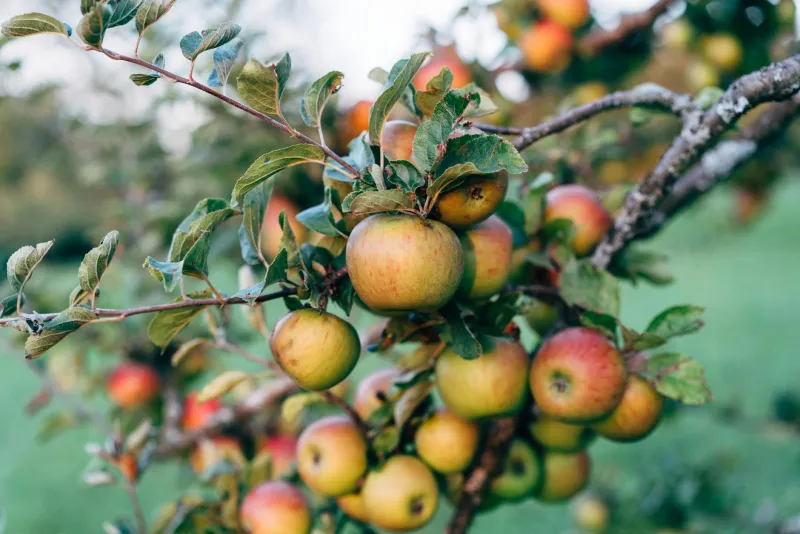
In early May, if you know where to look, you can find apple trees blooming on hillsides where no orchard has any business being. They grow through tangles of wild grape and blackberry cane, their trunks thick and gnarled from a century without pruning, their blossoms arriving on schedule every spring despite the fact that nobody planted them in living memory and nobody tends them now.
These are the ghost orchards of Appalachia. And they might be among the most quietly important agricultural sites in the United States.
What a Ghost Orchard Actually Is
The term sounds poetic, but it describes something specific. Between roughly the 1820s and the 1930s, homesteading families across the mountain regions of Virginia, West Virginia, Kentucky, Tennessee, and Ohio planted thousands of small orchards on their properties. Apples were a survival crop — dried, pressed into cider, stored in root cellars, and traded with neighbors. A family without an orchard was a family at risk.
These weren't commercial operations. They were intensely local. Seeds traveled from neighbor to neighbor, and trees were often grafted from particularly productive specimens that had no formal name — just a family nickname, or a description of the farm where they'd originated. Over generations, a distinct regional apple culture developed, with hundreds of local varieties that existed nowhere else on earth.
Then the families left. The Depression emptied mountain communities at a staggering rate. Young people moved to cities for factory work. Some farms were absorbed into national forests. Others were simply abandoned, the houses collapsing slowly while the apple trees — far more durable than any structure — kept growing.
The orchards didn't die. They went feral. And they've been out there ever since.
The People Who Hunt Them
Tom Brown is probably the most famous ghost orchard hunter in the country, though he'd likely be uncomfortable with the celebrity. Working out of North Carolina over several decades, Brown has identified and catalogued hundreds of old apple varieties from abandoned homestead sites, including multiple varieties that commercial pomologists had classified as extinct.
His method is part detective work and part bushwhacking. He researches old land records and family histories to identify where homesteads once stood. He talks to elderly residents who might remember their grandparents' trees. Then he hikes — often into seriously remote terrain — and looks for the telltale signs: a clearing that's slightly too open, a stone wall that once marked a garden boundary, and eventually the trees themselves, enormous and unpruned and still fruiting.
When he finds a promising specimen, he collects scion wood — small cuttings that can be grafted onto rootstock to propagate the variety. He's distributed thousands of these cuttings to orchardists, seed savers, and agricultural preservation organizations over the years.
Brown isn't alone. Across Appalachia, a loose network of foragers, food historians, and agricultural preservationists has been doing similar work, often sharing information through word of mouth or small regional networks. Some are motivated by culinary curiosity. Others are driven by a more urgent concern.
Why These Trees Matter Beyond the Flavor
Here's where the ghost orchard story becomes something larger than an interesting quirk of food history.
Modern commercial apple production is built on a remarkably narrow genetic base. The varieties you find in any American grocery store — Honeycrisp, Gala, Fuji, Granny Smith — represent a tiny sliver of the apple's actual genetic diversity. That uniformity creates vulnerability. A disease or pest that can crack the defenses of those dominant commercial varieties has the potential to cause serious, widespread damage to American apple production.
The old homestead trees carry genetics that commercial breeding programs have never accessed. Some of them have survived for a century in the wild with no fungicide sprays, no pesticide applications, no human intervention of any kind. The ones still standing and still fruiting have proven something important: they can handle whatever the local environment throws at them.
Agricultural researchers at several land-grant universities have become increasingly interested in this material. Disease resistance traits found in old Appalachian varieties could potentially be bred into commercial cultivars. The genetic diversity locked inside these forgotten trees is, in a very real sense, insurance against future agricultural risk.
Flavor is part of the story too, though. Anyone who has tasted fruit from an old homestead tree — the Sheepnose, the Fallawater, the Smokehouse, the Limbertwig — tends to describe the experience in slightly stunned terms. These aren't the uniform sweetness of a Honeycrisp. They're complex, sometimes tannic, sometimes almost spicy, occasionally strange in ways that are difficult to describe but impossible to forget. They taste like apples that were bred for actual eating rather than for shelf life and shipping durability.
What's Being Lost Right Now
The urgency behind the ghost orchard hunting comes from a simple biological fact: these trees are old. Many of the homestead orchards were planted 100 to 150 years ago, which means the trees themselves are approaching the outer limits of their natural lifespan. Every year, more of them fall to wind, disease, or simply old age.
Once a tree is gone without its genetics having been preserved, that variety is gone permanently. There's no recovering it from a database or reconstructing it from historical records. The only backup is the tree itself.
The preservation efforts are real but scattered and underfunded. The USDA maintains a national apple germplasm repository in Geneva, New York, but its collection, while extensive, can't keep pace with the rate of discovery in the field. Much of the preservation work is happening through informal networks — individual orchardists who've agreed to maintain grafted specimens, seed saving organizations, and the hunters themselves.
A Different Kind of American History
There's something quietly moving about the whole enterprise once you sit with it for a while.
These trees were planted by people who expected their families to tend them for generations. They were an act of long-term thinking — the kind that's easy to romanticize but genuinely difficult to practice. The families that planted them are gone, their names mostly lost, their houses long since rotted into the hillside.
But the trees kept their end of the bargain. They're still there. Still blooming every May. Still making apples that taste like nothing you've ever bought in a store.
All it takes is someone willing to wade through the briars to find them.