We Used to Share Our Stuff. Then We Started Paying to Lock It Away.
There's a Climate-Controlled Unit With Your Name on It
Drive through the outskirts of almost any American city and you'll pass one: a sprawling complex of identical orange or yellow doors, padlocked and silent, baking in the sun. Self-storage facilities have become such a fixture of the American landscape that we've basically stopped seeing them. The United States has more self-storage space per capita than any other country on earth — roughly 6 square feet for every man, woman, and child in the country. That's enough room to fit every American under a roof of stored belongings.
It's a genuinely strange thing when you step back and look at it. We have built an entire industry — a massive, profitable, endlessly expanding industry — around the premise that we own too many things to keep in our homes and need to pay someone else to store them for us. But here's the question worth asking: this problem isn't new. People have always accumulated more than they could easily manage. So what did they do before U-Haul started building orange door complexes on every highway interchange?
The answer, it turns out, is both more practical and more interesting than anything we're doing now.
The Urban Warehouse District as Community Storage
In the late 19th and early 20th centuries, American cities developed a specific piece of infrastructure that most people have completely forgotten about: the urban storage warehouse. These weren't the climate-controlled facilities of today. They were big, industrial buildings — often located near rail yards or waterfront districts — that rented space by the trunk, the crate, or the room.
For working-class and middle-class city dwellers, this was a practical necessity. Urban apartments were small, families moved frequently, and there was no suburban garage to absorb the overflow. Furniture warehouses in particular did a brisk business storing household goods for families between moves or during the summer months when wealthier residents decamped to the countryside. Moving companies built their businesses around this model — you hired them not just to transport your belongings but to store them for months at a time, retrieving individual items on request.
The economics were genuinely accessible. Renting storage space was a normal line item in a working-class household budget, not a luxury. And the social infrastructure around it was real — you knew the warehouseman, you might run into neighbors there, the transaction was embedded in a community context rather than conducted through an app.
Small Towns Had Something Even Better
Outside of cities, the storage problem got solved through systems that look almost radical by today's standards: people shared. Not in a vague, idealistic sense, but in a specific, practical, organized way.
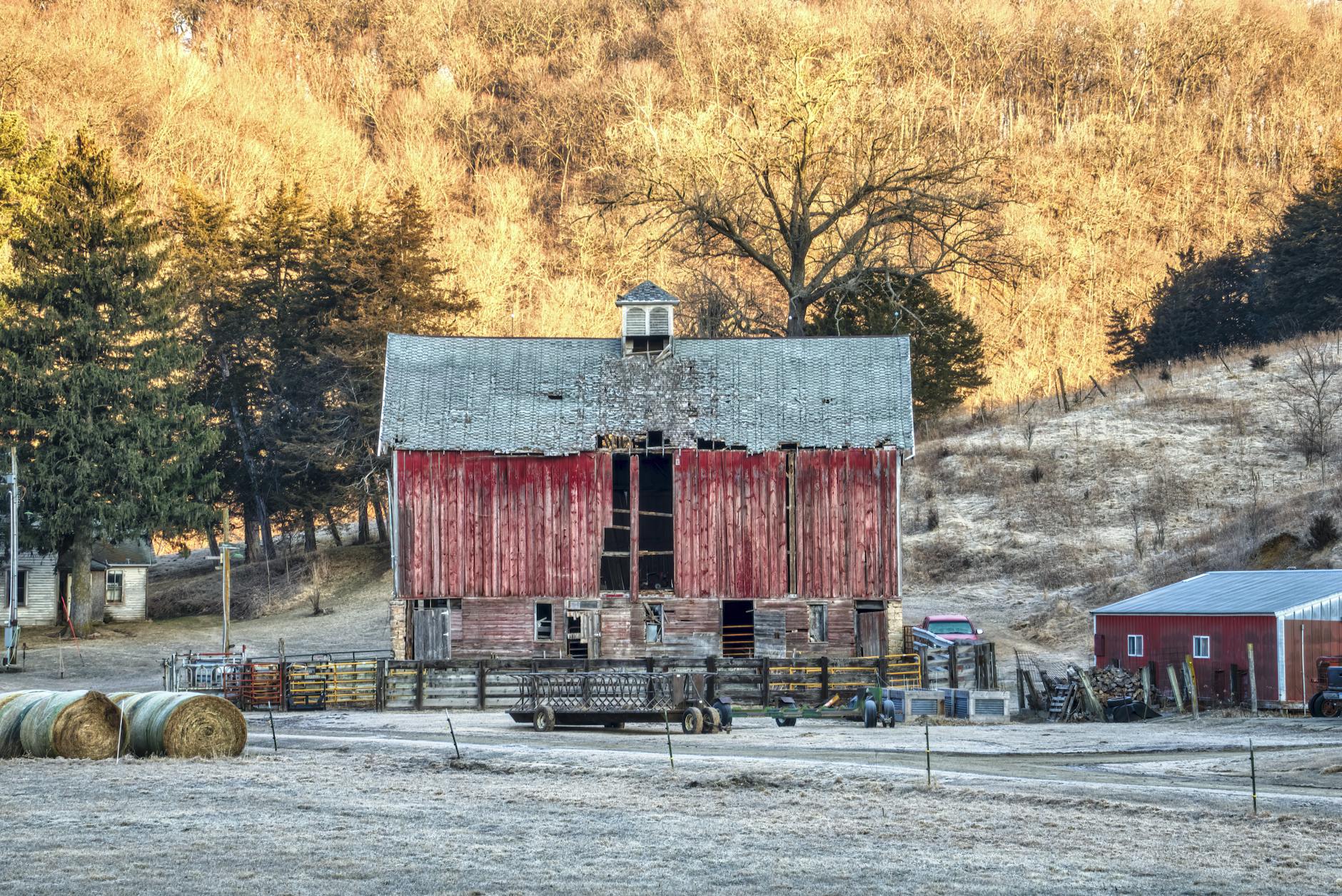
In rural communities, the barn was the original self-storage unit — and it rarely belonged to just one family's stuff. Neighbors stored equipment, feed, and seasonal goods in each other's outbuildings as a matter of course. The transaction was usually informal, governed by reciprocity rather than contracts. You stored your neighbor's hay press because someday you'd need to borrow it, or because his family had helped yours during a hard harvest, or simply because that's what you did.
Small-town general stores often played a storage role too, holding goods for rural customers between infrequent trips to town. Churches and grange halls stored community equipment. The distinction between private property and shared resource was considerably blurrier than it is today, and that blurriness was functional — it meant that individuals didn't need to own (or store) everything they might occasionally need.
How the Self-Storage Industry Actually Got Started
The modern self-storage industry is surprisingly recent. The first facilities that look like what we'd recognize today appeared in Texas in the late 1950s and early 1960s — specifically in cities like Odessa and Amarillo, where the postwar suburban boom had created a new kind of consumer: the homeowner with a garage full of stuff and nowhere to put the overflow.
The growth was slow at first, then explosive. By the 1980s, self-storage had become one of the most reliably profitable sectors in commercial real estate, and developers were building facilities as fast as they could find cheap land near highway exits. The business model was almost perfectly designed: low labor costs, predictable recurring revenue, and a customer base that almost never actually retrieved their belongings.
That last point is worth dwelling on. Storage industry data consistently shows that a significant percentage of self-storage customers end up storing things for years — sometimes decades — without ever retrieving anything meaningful. They're essentially paying a monthly fee to avoid making a decision about objects they no longer use. The warehouse district model of the 1900s was designed around retrieval. The modern self-storage model is, in a quiet way, designed around avoidance.
What We Actually Lost
There's a version of this story that's just about economics and land use patterns, and that version is interesting enough. But the more resonant version is about what happened to the social fabric when we stopped sharing storage space.
The communal storage systems of earlier American life — the shared barns, the neighborhood warehouses, the informal reciprocal arrangements — were also relationship infrastructure. They created regular occasions for neighbors to interact, to negotiate, to owe each other small favors. They embedded the practical business of managing your belongings inside a web of community obligation.
The self-storage unit eliminates all of that. It's perfectly private, perfectly transactional, and perfectly anonymous. You don't know who's in the unit next to yours. You don't owe anyone anything except the monthly fee.
For a country that spends a lot of time worrying about the decline of community, it's worth noting that we built a $50 billion industry specifically designed to make sure you never have to ask your neighbor for help storing anything ever again.
Maybe the most useful thing the old systems stored wasn't furniture or farm equipment. It was the habit of depending on each other.