The Human Switchboards: How America's Telephone Operators Were the Original Social Network
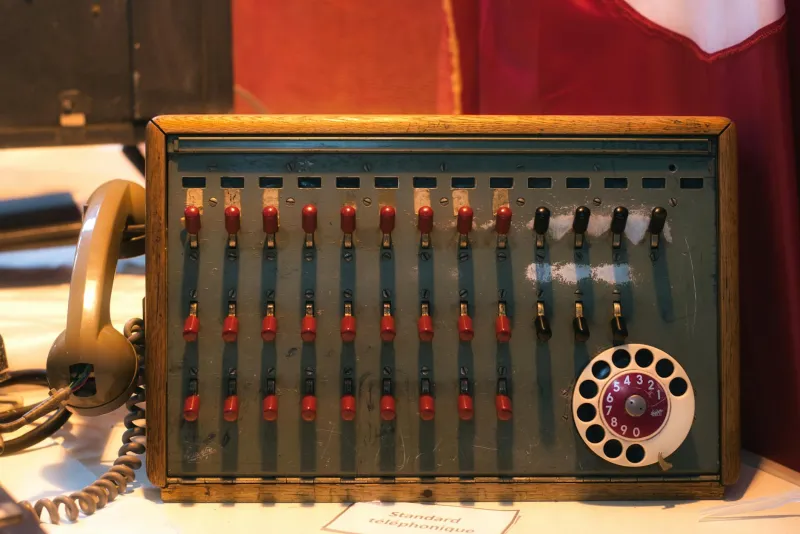
The Voice Behind the Wire
In 1952, when a fire broke out at the Hendricks County courthouse in Indiana, the first person to know wasn't the fire department. It was Mabel Thompson, the night telephone operator, who spotted the smoke from her switchboard window and immediately began connecting every fire volunteer in the county. Within minutes, she'd personally routed dozens of calls, coordinated the response, and likely saved the historic building.
Mabel wasn't unusual. Across small-town America, telephone operators were the human nervous system keeping communities alive — and they knew absolutely everything about everyone.
More Than Just "Number Please"
We remember telephone operators as polite voices asking "Number please?" But that sanitized image misses their real role. These women — and they were almost exclusively women — served as emergency dispatchers, news networks, alarm clocks, and sometimes the only human voice someone heard all day.
In rural areas especially, operators routinely went far beyond connecting calls. They'd wake up farmers for early morning milk runs, track down doctors during emergencies, and relay messages to families without phones. During the 1918 flu pandemic, operators in small towns became unofficial health coordinators, connecting quarantined families with doctors and coordinating care.
Bessie Snow, who worked the switchboard in tiny Eureka, Montana, for over thirty years, kept a detailed mental map of every resident's schedule. She knew when the banker went to lunch, when the doctor was making house calls, and which teenagers were dating. This wasn't gossip — it was essential infrastructure.
The Secrets They Kept
Operators could listen in on any conversation, and despite strict professional codes, human nature meant they often did. But rather than spreading gossip, most operators developed an almost priest-like discretion about what they heard.
They learned about affairs, business deals, family feuds, and medical diagnoses. Yet the most successful operators understood that their real power came from keeping secrets, not sharing them. Communities trusted them precisely because they proved trustworthy.
During World War II, operators became informal intelligence networks. They'd notice patterns in long-distance calls, unusual requests for connections, or conversations that seemed suspicious. Some operators in coastal areas were trained to recognize potential sabotage communications.
When Technology Meant Unemployment
The introduction of direct-dial service in the 1950s and 60s slowly eliminated these human connections. AT&T marketed the change as progress — faster, more efficient, more private. What they didn't advertise was what communities were losing.
In 1950, there were over 340,000 telephone operators in America. By 1980, that number had dropped to fewer than 50,000, mostly in large cities handling long-distance calls. Small-town operators virtually disappeared.
The transition wasn't just technological — it was social. Suddenly, calling someone meant navigating an impersonal system instead of chatting with Mabel or Bessie. Emergency calls that once went through operators who knew every address and resident now relied on strangers reading from databases.
The Last of the Human Switches
Some operators fought to stay relevant. In Dawson City, Canada, the local operator continued working until 1999, serving as the town's unofficial information center long after direct-dial arrived. Residents would call the operator not for connections, but for weather updates, store hours, or just to check if someone was home.
Even today, a few manual switchboards survive in remote areas or specialized settings. The Hotel Monteleone in New Orleans still employs human operators, partly for charm but also because guests prefer talking to someone who knows the city.
What We Lost in Translation
The disappearance of telephone operators marked more than technological progress — it represented a shift from community-based infrastructure to corporate-managed systems. These women weren't just workers; they were the human interfaces between technology and daily life.
In our age of automated customer service and digital isolation, the telephone operator's role seems almost magical. They provided personalized service, local knowledge, and human connection as standard features, not premium upgrades.
Modern social networks promise to connect us, but they're built on algorithms and data mining. The original social network ran on copper wires and women who cared enough about their neighbors to wake up at 3 AM to connect an emergency call.
The Invisible Infrastructure
Next time you tap a smartphone screen to make a call, remember the invisible infrastructure that once made connection possible. It wasn't just wires and switches — it was Mabel Thompson watching for courthouse fires, Bessie Snow tracking down the doctor, and thousands of other women who kept America talking to itself.
They were the forgotten guardians of communication, holding communities together one call at a time. And when they disappeared, they took something irreplaceable with them: the human touch that made technology feel personal.