The Room Where Lost Mail Went to Die
In a nondescript federal building in Washington D.C., behind doors marked only with bureaucratic numbers, sat one of America's strangest workplaces. Here, dozens of clerks spent their days doing something that would seem impossible today: opening other people's mail, reading their most private correspondence, and trying to reunite lost letters with their intended recipients.
This was the Dead Letter Office, and for more than 150 years, it served as America's accidental detective agency.
The Postal Service's Secret Mission
The Dead Letter Office began in 1825, when the U.S. Post Office realized it had a growing problem: millions of letters that couldn't be delivered. Wrong addresses, illegible handwriting, missing postage, or simply mail addressed to people who had moved or died created an enormous backlog of postal orphans.
Rather than simply destroying these letters, Postmaster General John McLean made a radical decision: hire clerks to open undeliverable mail, look for clues about the sender or recipient, and attempt to complete the delivery.
It was a task that required the skills of a detective, the patience of a scholar, and the discretion of a priest.
The Art of Mail Detection
Dead letter clerks developed sophisticated techniques for solving postal mysteries. They became experts at reading damaged addresses, deciphering foreign handwriting, and piecing together torn envelopes.
But their real skill lay in detective work. A letter addressed simply to "Mary, somewhere near the big church in Ohio" might seem hopeless, but experienced clerks knew how to extract clues from the letter's contents. References to local businesses, family names, or geographic features could narrow down the location. Postmarks and routing stamps told stories about the letter's journey.
Clerk supervisor James Holbrook, who worked in the Dead Letter Office for over thirty years, developed what he called "the science of postal detection." His methods included:
- Handwriting analysis to identify regional writing styles and education levels
- Paper forensics to determine when and where letters were written
- Content mapping to extract geographic and personal clues from letter text
- Network analysis to connect multiple letters from the same sender or area
Holbrook's techniques were so effective that by the 1890s, the Dead Letter Office was successfully delivering nearly 40% of the mail that arrived there.
When Mail Detectives Became Crime Fighters
The clerks' detective skills inevitably led them to stumble upon criminal activity. Since they were authorized to open any undeliverable mail, they occasionally found evidence of fraud, theft, and even murder.
In 1876, clerk Margaret Thompson opened a letter that contained detailed plans for a bank robbery in Colorado. The letter had been misdirected due to a smudged address. Thompson alerted authorities, who arrested the conspirators before they could carry out their plan.
The most famous case involved the 1881 assassination of President James Garfield. While processing mail related to the case, Dead Letter Office clerks discovered a cache of threatening letters sent to Garfield weeks before the shooting. The letters, which had been misdirected to the wrong government office, contained detailed threats that might have prevented the assassination if they had reached the proper authorities in time.
The Voyeurs of American Life
Working in the Dead Letter Office provided an unprecedented window into American private life. Clerks read love letters, business correspondence, family secrets, and personal confessions. They witnessed the full spectrum of human experience through the mail.
Clerk diaries from the period reveal the strange intimacy of this work. "Today I read a letter from a mother to her son who died at Gettysburg," wrote clerk Sarah Mitchell in 1863. "She had been writing to him for two years, not knowing he was gone. I wept over her words before forwarding the letter to his commanding officer."
The emotional toll was significant. Many clerks reported feeling like unwilling confidants to thousands of strangers. Some developed elaborate filing systems to track recurring correspondents, hoping to eventually reunite separated families or lovers.
The Strangest Deliveries
The Dead Letter Office didn't just handle written correspondence. Americans mailed the most extraordinary items, and when these packages couldn't be delivered, they ended up in the clerks' hands.
The office's annual reports catalog a museum's worth of bizarre mailed objects:
- A glass eye addressed to "One-Eyed Pete in California"
- Wedding dresses sent to brides who had apparently changed their minds
- Prosthetic limbs mailed to Civil War veterans
- Live animals, including chickens, rabbits, and once, memorably, a small alligator
- False teeth (surprisingly common)
- Homemade weapons
- Family photographs
- And thousands upon thousands of dollars in cash and valuables
When items couldn't be returned to senders, the office held annual auctions that became popular Washington social events. Citizens could bid on unclaimed jewelry, books, clothing, and curiosities from across America.
The Technology of Detection
As America modernized, so did the Dead Letter Office's methods. By the 1890s, clerks were using:
- Chemical treatments to restore faded ink and reveal erased text
- Photography to preserve evidence from damaged mail
- Telegraph networks to quickly verify addresses and identities
- Card catalog systems to track patterns and recurring problems
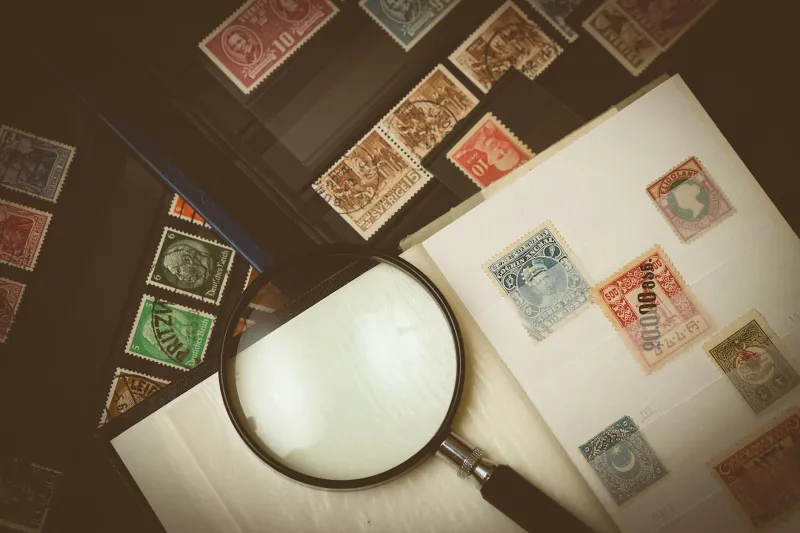
- Specialized magnifying equipment for reading damaged addresses
The office developed one of America's first systematic approaches to information analysis, decades before similar techniques were used by law enforcement agencies.
The Human Stories
Behind every dead letter was a human story, and the clerks became invested in these narratives. They reunited families separated by war, delivered final messages from dying relatives, and connected lovers across continents.
One of the most touching cases involved a series of letters written by children to their father who had gone west during the California Gold Rush. The letters had been accumulating for three years due to addressing problems. Dead Letter Office clerks spent months tracking down the father, eventually locating him in a remote mining camp. The reunion of father and children became a celebrated story in newspapers across the country.
The Decline and Fall
The Dead Letter Office's golden age began to fade in the early 20th century. Improved addressing standards, better postal training, and new communication technologies reduced the volume of undeliverable mail.
World War II brought new challenges as military censorship and overseas mail created different types of delivery problems. The office adapted, helping to trace missing soldiers and deliver mail to moving military units.
But by the 1950s, the romantic era of mail detection was ending. Automated sorting systems, zip codes, and eventually electronic communication made the old detective methods obsolete.
The End of an Era
The Dead Letter Office officially closed in 2006, replaced by automated systems and computerized mail recovery programs. The last generation of mail detectives retired, taking with them over a century of accumulated knowledge about American correspondence patterns, regional addressing habits, and the art of solving mysteries through mail.
Today, undeliverable mail is processed by machines and databases. The human element—the intuition, creativity, and detective instincts that made the Dead Letter Office clerks so effective—has been replaced by algorithms.
The Legacy of America's Mail Detectives
The Dead Letter Office clerks were America's first information detectives, developing techniques for analyzing incomplete data, making connections across vast networks, and solving mysteries with limited clues. Their methods influenced early police detective work, private investigation techniques, and even modern data analysis approaches.
More importantly, they served as guardians of human connection in an era when mail was often the only link between separated families and friends. They understood that every letter represented a human relationship, and they worked tirelessly to honor those connections.
In an age of instant communication and digital tracking, it's hard to imagine a time when letters could simply disappear into the postal system. But for over 180 years, a dedicated group of clerks in Washington D.C. made sure that America's most important messages eventually found their way home, one dead letter at a time.