The Great Summer Exodus
Every May, like clockwork, entire neighborhoods in New York, Philadelphia, and Boston would empty out. Trunks were packed, servants dispatched ahead, and families began their seasonal pilgrimage to higher ground. This wasn't leisure travel—it was survival.
In 19th-century America, summer in the city wasn't just uncomfortable; it was considered medically dangerous. Physicians warned that stagnant urban air bred disease, particularly the dreaded "summer complaint" that killed thousands of children each year. The solution? Follow the cool air wherever it led.
The Medical Theory Behind the Madness
Doctors of the era believed in "miasma theory"—the idea that disease spread through bad air, or "night air" as it was ominously called. Summer heat trapped these supposed poisons in city streets, making urban areas death traps for anyone who could afford to leave.
Dr. Samuel Cartwright, a prominent New Orleans physician, published detailed maps showing "fever zones" across American cities. His prescription was simple: get above 1,000 feet elevation, find moving air, or head to mineral springs where the earth's natural chemistry could purify your blood.
This wasn't quackery—it was the best medical advice money could buy. And for families with means, it sparked one of America's most sophisticated seasonal migration systems.
The Highland Highway
The wealthy developed intricate routes that read like military campaigns. New York families might start at Saratoga Springs in June, move to the White Mountains of New Hampshire in July, then finish at Bar Harbor, Maine, in August. Each stop served a specific purpose: mineral waters for digestion, mountain air for the lungs, sea breezes for general health.
The Greenbrier in West Virginia became known as "America's Summer Capital" because so many politicians and business leaders converged there. The resort's guest registry from the 1870s reads like a who's who of American power—senators, railroad barons, and Supreme Court justices all fleeing Washington's swampy heat.
But the most elaborate routes belonged to Southern families. They'd escape to Virginia's mountain resorts like Hot Springs and Warm Springs, or make the grueling journey to Flat Rock, North Carolina—a highland community that became so popular with Charleston's elite it earned the nickname "Little Charleston."
The Ghost Resorts
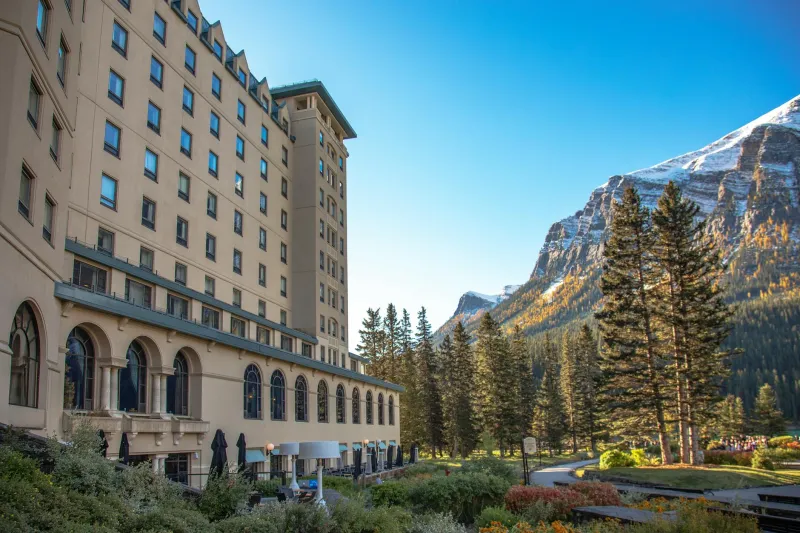
Today, traces of this lost migration network dot the American landscape like archaeological sites. Drive through the mountains of Pennsylvania, Virginia, or North Carolina, and you'll find the bones of grand hotels that once housed summer refugees.
The Catskill Mountain House in New York, once called the "most famous hotel in the world," hosted families for entire seasons. Its ruins still overlook the Hudson Valley, a crumbling testament to when geography was medicine.
In Colorado, the Hotel Colorado in Glenwood Springs was built specifically for Eastern families seeking high-altitude relief. President Theodore Roosevelt made it his summer White House, conducting affairs of state from the mountain air he believed kept him healthy.
The Infrastructure of Escape
These seasonal migrations required massive infrastructure. Railroad companies built entire branch lines to serve summer communities. The Delaware, Lackawanna & Western Railroad marketed itself as the "Route of Health" for its connections to mountain resorts.
Steamboat companies created elaborate schedules coordinated with hotel seasons. The Hudson River Day Line could transport an entire Manhattan neighborhood to mountain retreats in a single morning.
Local communities transformed their economies around these annual invasions. Farmers in the White Mountains switched from agriculture to hospitality, converting barns into boarding houses and hiring out as mountain guides.
The Science They Got Wrong (And Right)
The medical theories driving these migrations were largely incorrect. Miasma theory would eventually give way to germ theory, proving that bacteria, not bad air, caused disease. But the summer refugees weren't entirely wrong.
Urban areas in the 1800s were genuinely dangerous in summer. Poor sanitation, contaminated water supplies, and overcrowding did create deadly conditions. The wealthy families fleeing to clean mountain springs and well-ventilated highland hotels were avoiding real health risks, even if they misunderstood the science.
Ironically, their seasonal escapes may have saved them from cholera outbreaks, typhoid epidemics, and the infant mortality that plagued summer cities.
What Ended the Great Escape
The seasonal refugee system began collapsing in the early 1900s. Electric fans provided relief without travel. Improved urban sanitation made cities safer. And eventually, air conditioning eliminated the medical justification for summer escape entirely.
World War II delivered the final blow. Gas rationing and labor shortages shuttered many mountain resorts permanently. The grand hotels that survived often struggled to fill rooms once families could stay comfortable at home.
The Legacy Hidden in Plain Sight
The next time you pass a roadside historical marker for a "famous resort" in an unlikely mountain town, you're seeing the ghost of America's seasonal refugee network. These weren't just vacation spots—they were the destinations of a sophisticated survival system that shaped American leisure culture.
The Hamptons, Martha's Vineyard, and other elite summer destinations are the direct descendants of this 19th-century medical migration. The only difference? Today's summer escapes are about status, not survival. The wealthy still flee cities every summer—they just don't call it medicine anymore.