The Architecture Nobody Talks About
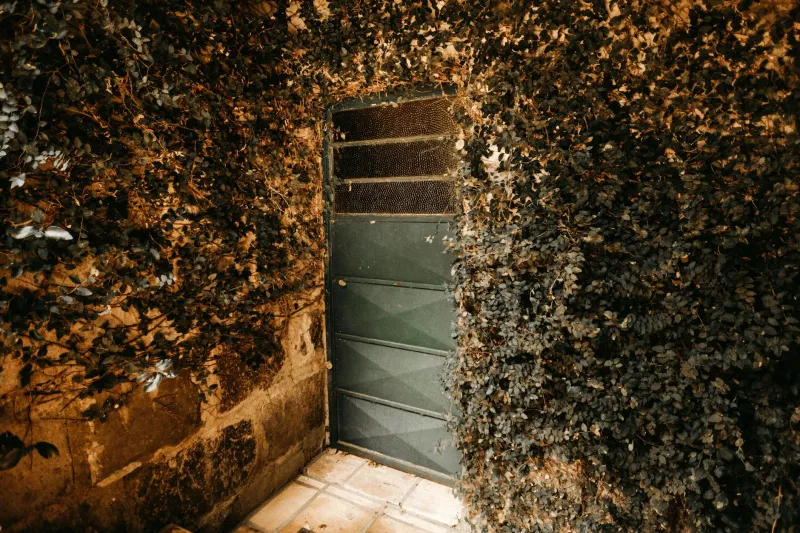
In a modest house outside Richmond, Virginia, contractors renovating a kitchen made an extraordinary discovery. Behind what appeared to be a solid wall, they found a perfectly preserved hidden room, complete with ventilation system, secret entrance, and evidence of long-term habitation. The engineering was sophisticated—more advanced than anything in the main house.
The homeowners had lived there for decades without knowing it existed.
This isn't an isolated case. Across the American South and border states, architectural historians are uncovering a vast network of hidden spaces—rooms, tunnels, and concealed structures built with remarkable ingenuity by enslaved people, freed slaves, and free Black communities. These aren't the crude hiding places you might imagine. They're sophisticated engineering marvels that most textbooks never mention.
Beyond the Underground Railroad
When most Americans think of hidden spaces and slavery, they picture Underground Railroad stations—the secret rooms and tunnels that helped enslaved people escape north. But that's only part of the story.
The hidden architecture being discovered today served multiple purposes across different time periods. Some spaces were built during slavery for protection from violent masters or overseers. Others were constructed after emancipation, when freed families needed places to hide from night riders and early Klan violence. Still others date to the Jim Crow era, when Black communities created safe spaces in a hostile world.
"We're finding structures that show incredible sophistication," says Dr. Ayana Thompson, an architectural historian at Howard University who's documenting these spaces. "These weren't just holes in the ground. They were carefully planned, expertly built, and designed to sustain human life for extended periods."
The Engineering Marvels
The technical complexity of these hidden spaces often surpasses the main structures they're built into. In Charleston, South Carolina, researchers discovered a concealed basement room beneath a modest 1870s house that featured:
- A ventilation system using hollow brick chimneys that drew fresh air from outside
- A drainage system that prevented flooding during heavy rains
- Multiple escape routes, including a tunnel that connected to a neighboring property
- Sound dampening using sawdust-filled wall cavities
The room could comfortably house eight people for weeks.
Similar discoveries across the region reveal a pattern of sophisticated engineering knowledge. Hidden rooms feature complex pulley systems for moving heavy concealment doors. Tunnel networks include strategic air shafts disguised as well casings. Some concealed spaces have elaborate early warning systems using mirrors and string to detect approaching threats.
The Master Builders
Who possessed the knowledge to build these architectural marvels? The answer challenges common assumptions about education and skill in 19th-century Black communities.
Many of the builders were skilled craftsmen who had worked on major construction projects during slavery. In cities like New Orleans, Charleston, and Richmond, enslaved and free Black workers built some of America's most impressive buildings. They understood advanced masonry, carpentry, and engineering principles that they later applied to their hidden projects.
Titus Johnson, born into slavery in Virginia, became legendary in his community for the hidden spaces he designed after the Civil War. Local stories credit him with building over thirty concealed rooms across three counties, each customized for the specific threats facing that family or community.
Johnson's structures shared common features: multiple entrances, sophisticated air circulation, and what historians now call "modular expansion"—the ability to quickly enlarge a space if more people needed shelter.
The Preservation Race
Today, these hidden architectural treasures are disappearing at an alarming rate. Urban development, home renovations, and simple neglect are erasing this chapter of American building history.
"We estimate we're losing these structures at a rate of three or four per month," says Marcus Williams, who runs the Hidden Heritage Preservation Project. "Most property owners don't even know they exist. By the time we hear about them, they've often been destroyed during renovations."
The preservation challenges are immense. Many hidden spaces are structurally integrated into buildings in ways that make them impossible to preserve without protecting the entire structure. Others are on private property where owners may be reluctant to acknowledge their existence.
Funding is another obstacle. These structures don't fit neatly into existing preservation categories. They're not grand mansions or public buildings—they're the hidden infrastructure of survival, built by communities that left few written records.
The Technology of Concealment
The ingenuity of these hidden spaces extends beyond basic construction to sophisticated concealment technology. Researchers have documented:
Disappearing Staircases: Entire stairways built on pivot systems that could be folded into walls, leaving no trace of access to upper floors.
False Floor Systems: Rooms built beneath regular floor joists, accessible only through specific floorboards that lifted out in precise sequences.
Camouflaged Entrances: Doorways hidden behind moving bookcases, false fireplaces, and even functional kitchen cabinets that swung away from walls.
Early Warning Networks: Systems of bells, mirrors, and signal fires that could alert hidden occupants to approaching danger from miles away.
One particularly sophisticated system, discovered in a house outside Nashville, included a periscope-like device that allowed people in a basement hideout to observe activity on the main floor above.
The Stories They Tell
These hidden spaces preserve more than architectural history—they contain the physical evidence of American stories that were never written down.
In a concealed room in North Carolina, researchers found children's drawings on the walls, suggesting families lived in hiding for extended periods. A hidden space in Kentucky contained a small library of books, indicating that education continued even in concealment.
Perhaps most powerfully, many of these spaces show evidence of multiple periods of use. Layers of different materials, varying construction techniques, and updated concealment methods suggest that some hiding places served communities across generations.
What We're Learning
The discovery of these sophisticated hidden structures is rewriting assumptions about post-Civil War Black communities. Far from being helpless victims, these communities demonstrated remarkable resourcefulness, technical skill, and strategic thinking.
They created an entire parallel infrastructure of safety—a hidden America built beneath and within the visible one. This infrastructure required not just individual skill but community cooperation, shared knowledge, and careful planning.
"These spaces represent one of the most sophisticated survival networks in American history," notes Dr. Thompson. "They're evidence of communities that refused to be victims, even under the most dangerous circumstances."
The Race Against Time
Today, a small group of historians, architects, and preservationists are working frantically to document these spaces before they disappear entirely. Using ground-penetrating radar, thermal imaging, and other modern tools, they're finding hidden rooms and tunnels that haven't been opened in decades.
Each discovery adds to our understanding of American ingenuity, community resilience, and the sophisticated ways people have always found to survive in hostile environments.
But time is running out. Every month, more of these architectural marvels are lost to development, decay, or simple ignorance of their existence. The hidden history of American freedom is literally crumbling away, taking with it evidence of some of the most remarkable building achievements in our nation's past.