The Factory Floor That Officially Didn't Exist After Midnight
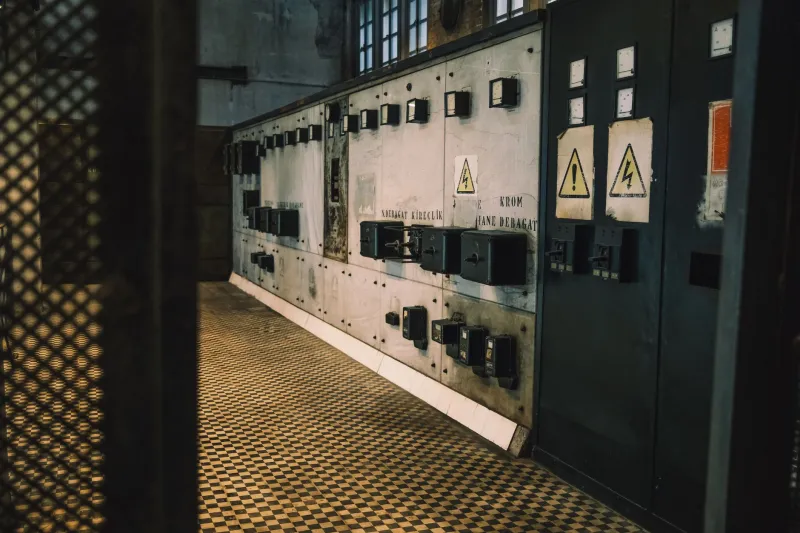
The lights were supposed to be off. The machines were supposed to be quiet. According to the time cards, the payroll ledgers, and the production logs that might one day face a tax assessor or a government auditor, the factory had shut down hours ago. But if you drove past certain plants in Ohio, Michigan, or Pennsylvania at two in the morning during the 1940s and 1950s, you might notice something: the parking lot wasn't entirely empty, and if you listened hard enough, you could hear the low hum of machinery that wasn't supposed to be running.
America's official industrial history is a story of shifts, unions, quotas, and regulated production. What that history tends to leave out is the shadow layer — the ghost shifts that ran underneath it, invisible to the ledgers, operating in the gaps between what was reported and what was actually happening on the floor.
Why a Factory Would Hide Its Own Production
To understand why clandestine production runs existed, you have to understand the extraordinary pressures American manufacturers faced during and after World War II. During the war, plants were operating under government contracts with strict output quotas, material allocations, and price controls. Officially, a factory making airplane parts could only produce so many units per month, using a fixed allotment of aluminum, under a federally negotiated price structure.
But demand didn't always respect those quotas. Military procurement officers sometimes needed more than the official numbers allowed. And plant managers, patriotic or simply entrepreneurial, sometimes found ways to produce more — running lines on nights and weekends using materials that had been quietly accumulated, stockpiled in ways that wouldn't show up cleanly on the official inventory. The finished goods would be delivered through informal channels, sometimes billed creatively, sometimes simply absorbed into larger contract deliveries without separate documentation.
After the war, the incentives shifted but didn't disappear. Tax law became a major driver. Under mid-century corporate tax structures, reported profits were heavily taxed, but unreported production revenue — especially if it moved through informal distribution channels or was exchanged in kind — could slip through gaps in ways that benefited plant owners considerably. A factory that officially produced 10,000 units a month might actually produce 12,000, with the extra two thousand handled through arrangements that kept them off the main books.
The People Who Ran the Ghost Shifts
The workers who staffed these off-the-record production runs were usually drawn from the same pool as the regular workforce, but the selection process was careful and almost entirely social. You didn't get asked to work a ghost shift through any official channel. You got asked because your foreman trusted you, because you'd been around long enough to understand what was expected, and because you knew how to keep your mouth shut.
Pay arrangements varied. Some workers received cash directly from supervisors, untraceable and untaxed on both sides. Others received unofficial benefits — priority for overtime on the regular books, preferential scheduling, access to materials or equipment for personal use. The relationship was transactional but also deeply rooted in the informal loyalty structures that governed factory floor culture in that era.
Union dynamics were complicated. In plants with strong union representation, ghost shifts were sometimes an open secret that union leadership tolerated because the workers involved were getting paid — even if informally — and because challenging the arrangement risked disrupting relationships with management that served broader purposes. In non-union plants, the calculation was simpler: workers participated because they needed the money and the foreman asked them to.
Government Contracts and the Convenient Gray Zone
Some of the most significant ghost shift operations were tied directly to government work — particularly during the Korean War era and into the early Cold War period, when defense procurement was enormous, fast-moving, and often operating under pressure that made strict accounting inconvenient for everyone involved.
Procurement officers who needed a supplier to hit a target ahead of schedule sometimes didn't ask too many questions about how it got done. Plant managers who ran extra production to meet a deadline understood that the paperwork could be arranged to reflect whatever story was most useful. The goods existed, they were delivered, the contract was fulfilled — and the mechanics of how that happened were left deliberately vague.
This wasn't corruption in any simple sense. It was a pragmatic adaptation to the gap between what bureaucratic systems could officially accommodate and what the actual demands of wartime and Cold War production required. The gray zone was functional. It got things made.
What the Official Record Missed
Historians of American manufacturing tend to work from what the documents say. Production logs, union contracts, tax filings, procurement records — these are the sources that shape the story. But ghost shift operations were specifically designed to leave minimal documentation, which means the official industrial history of mid-20th century America is almost certainly an undercount of what actually happened on factory floors.
The real productive capacity of American industry during this period was likely higher than the official numbers suggest. The real complexity of how goods moved from manufacturer to consumer — and how money moved back — was messier and more creative than any textbook account of regulated postwar capitalism would indicate.
What the ghost shifts ultimately reveal is something American industry has always known but rarely said out loud: the official version of how things work and the actual version are almost never exactly the same. The machines ran when they needed to run. The records said what they needed to say. And somewhere in the gap between those two facts, a significant piece of American manufacturing history is still waiting to be fully told.