When Farmers Tracked Tornadoes: The Citizen Scientists Who Built America's Weather Network
The Schoolteacher's Daily Duty
Every morning at precisely 7 AM, Sarah Mitchell stepped onto her front porch in rural Nebraska, thermometer in hand. The year was 1891, and while her neighbors might have thought she was just checking if she needed a coat, Sarah was actually participating in one of the most ambitious citizen science projects in American history.
Sarah wasn't alone. Across the continent, from lighthouse keepers in Maine to ranch hands in Montana, thousands of volunteers were taking the same careful measurements. They recorded temperatures, tracked rainfall, noted wind direction, and observed cloud formations. Then, once a week, they'd carefully transcribe their observations onto official forms and mail them to a modest office in Washington, D.C.
This was America's first national weather network — and it was built entirely by volunteers.
The Birth of Weather Democracy
The U.S. Weather Bureau, established in 1870, faced an impossible task: how do you predict weather patterns across a continent-sized country with virtually no technology? Their solution was brilliantly simple: ask everyone to help.
The bureau recruited what they called "cooperative observers" — ordinary citizens willing to take daily weather measurements. By 1890, more than 2,000 volunteers were participating. By 1915, that number had swelled to over 4,000.
These weren't trained meteorologists. They were farmers who understood that weather meant survival, teachers who had time for morning observations, and small-town postmasters who could reliably mail in reports. The bureau provided basic instruments — a thermometer, a rain gauge, sometimes a barometer — and simple instructions.
What emerged was a distributed intelligence network that modern tech companies would envy.
Reading the Sky Like Scripture
The volunteer weather watchers developed an almost mystical connection to atmospheric patterns. Farmers learned to spot the subtle signs that preceded devastating hail storms. Lighthouse keepers could predict dangerous gales days in advance. Small-town observers began recognizing the telltale signs of the massive weather systems that swept across the Great Plains.
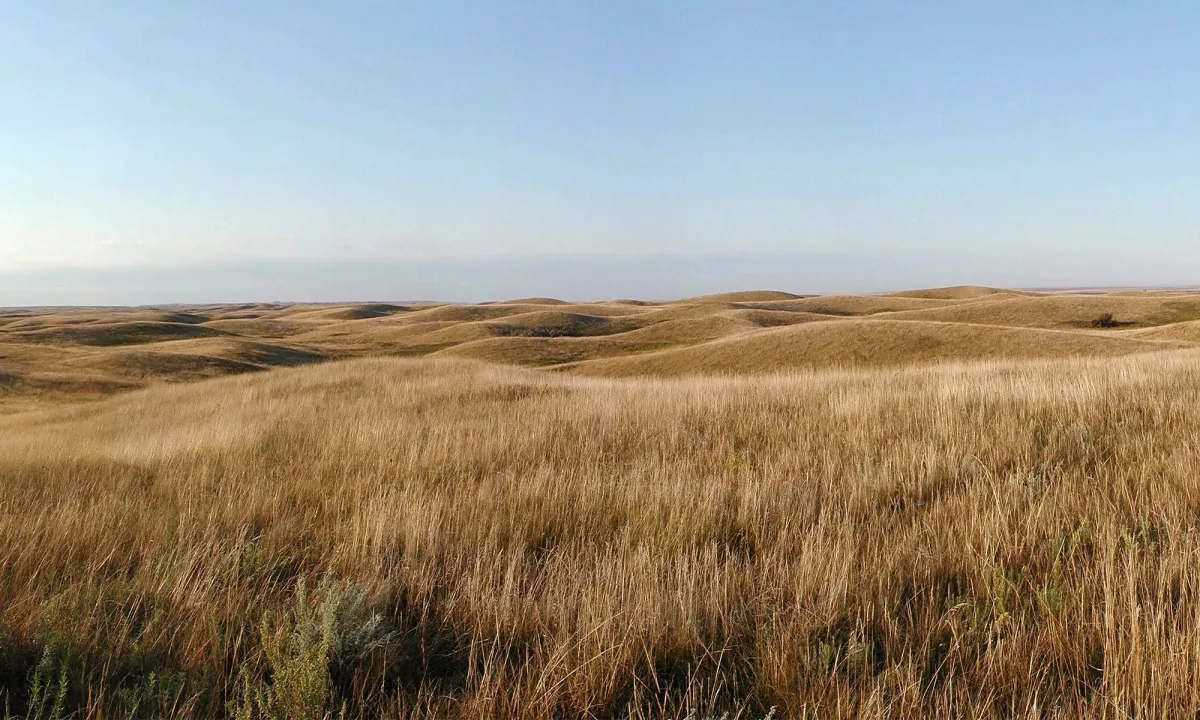 Photo: Great Plains, via defenders.org
Their observations weren't just numbers on a page — they were early warning systems that saved lives. When a volunteer in Kansas reported a sudden temperature drop and unusual cloud formations, telegraph operators would race to warn communities downwind. When multiple observers across the Midwest reported similar patterns, the Weather Bureau could issue the era's equivalent of a tornado watch.
This human network was remarkably accurate. Studies later showed that these citizen observers, armed with simple tools and careful training, were often more reliable than the primitive mechanical instruments of the day.
The Invisible Infrastructure
What made this system extraordinary wasn't just its scale — it was its resilience. Unlike centralized weather stations that could be knocked out by the very storms they were trying to track, this distributed network kept functioning. If one observer missed a day, dozens of others filled the gaps.
The volunteers developed their own informal communication networks. Farmers would compare notes at grain elevators. Lighthouse keepers shared observations with passing ships. Railroad telegraphers became unofficial weather coordinators, passing along urgent updates between official reports.
This grassroots meteorology created something unprecedented: a real-time picture of weather patterns across an entire continent.
When Progress Erased the Past
As technology advanced, the volunteer network quietly faded from public memory. Satellites replaced human observers. Computer models superseded local knowledge. The National Weather Service, which absorbed the old Weather Bureau, gradually shifted toward centralized, high-tech forecasting.
Many of the volunteer stations continued operating — some for decades after they were officially "obsolete." But their contributions became invisible, buried in databases and forgotten by a culture increasingly convinced that technology always trumped human observation.
Today, automated weather stations dot the landscape, and satellites peer down from orbit. Yet meteorologists still rely on data from cooperative observers — now numbering about 8,700 volunteers nationwide. The difference is that most Americans have no idea these citizen scientists exist.
The Wisdom of Distributed Knowledge
The forgotten story of America's volunteer weather network reveals something profound about how knowledge works. Long before anyone talked about "crowdsourcing" or "distributed computing," ordinary Americans proved that complex problems could be solved through coordinated individual effort.
These citizen scientists didn't just collect data — they created a culture of careful observation that shaped how Americans understood their environment. They showed that expertise doesn't always come from institutions, and that sometimes the most reliable knowledge emerges from the ground up.
In an age of climate change and extreme weather, perhaps it's time to remember what Sarah Mitchell and thousands of volunteers like her accomplished with nothing more than dedication, simple tools, and a shared commitment to understanding the sky above their heads.
Their legacy lives on in every weather forecast — a reminder that some of our most essential infrastructure was built not by experts or corporations, but by ordinary people who understood that knowledge, like weather, belongs to everyone.