Buried in the Backyard: The Unsung Gardeners Who Saved American Food from Itself
The Tomato That Almost Disappeared
There's a tomato called the Mortgage Lifter that you can still find at farmers markets and seed swaps across the country. It's enormous, deeply ridged, and tastes like what a tomato is supposed to taste before the grocery store version convinced an entire generation that pale pink and crunchy was normal. A man named Radiator Charlie bred it in West Virginia in the 1930s and sold enough plants to pay off his house. After he died, the variety nearly went with him.
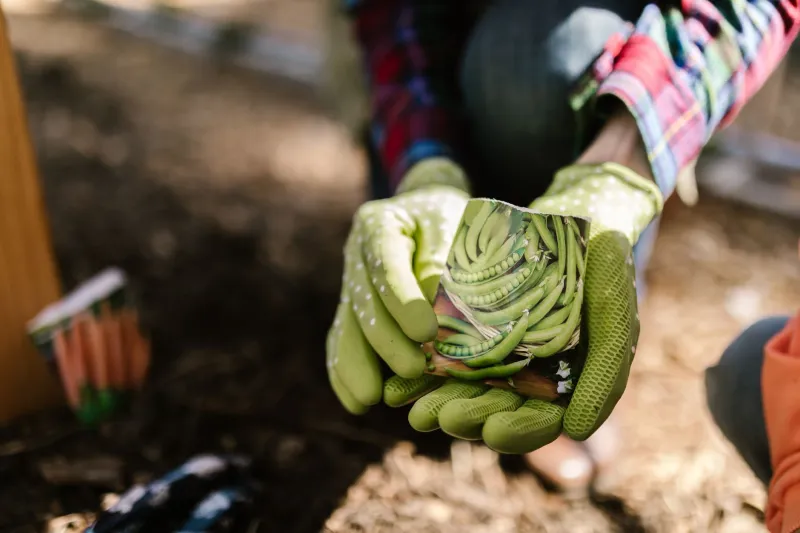
It survived because someone saved the seeds. And then someone else saved them. And then someone else, in a chain of quiet, deliberate preservation that stretched across decades and involved people who never met each other and never coordinated their efforts and never thought of themselves as doing anything particularly important.
That chain — fragile, informal, largely invisible — is the reason you can eat a Mortgage Lifter tomato today. It is also, in miniature, the story of how American food diversity survived the twentieth century.
The Great Narrowing
To understand what these gardeners were quietly fighting against, you have to understand what was happening to American agriculture from roughly the 1920s onward.
Farming was industrializing. Seed companies were developing hybrid varieties that produced reliably uniform crops, resisted mechanical harvesting damage, and shipped well over long distances. These were genuine innovations, and they solved real problems for commercial agriculture. But they came with a hidden cost: hybrid seeds don't breed true. You can't save them and plant them next year and get the same thing. You have to buy new seeds every season.
This was great for seed companies. It was catastrophic for genetic diversity. As hybrid varieties displaced traditional ones, the old varieties stopped being grown commercially. They stopped being available in catalogs. They stopped existing in most places — except in the hands of people who had saved the seeds themselves.
By some estimates, the United States lost somewhere between 75 and 90 percent of its food crop varieties during the twentieth century. Thousands of apple types. Hundreds of bean varieties. Corn that came in colors that most Americans have never seen. Squash, melons, peppers, and greens that existed in American gardens for generations and then, quietly, didn't.
The Gardeners Who Didn't Get the Memo
The people who prevented this from being a total loss were not, for the most part, scientists or conservationists or policy advocates. They were home gardeners. And a disproportionate number of them were immigrants.
This makes a particular kind of sense. When you leave a country and come to a new one, the seeds you carry with you are not just agricultural material. They are continuity. The Brandywine tomato that your grandmother grew in Slovakia. The particular strain of bitter melon your family brought from Guangdong. The dried bean variety that has been in your family in Oaxaca for longer than anyone can remember. These things connect you to a place and a people across an ocean and a generation.
Immigrant gardeners saved seeds with an intensity that native-born Americans often didn't match, because for them the stakes were different. The seeds weren't just practical. They were irreplaceable.
In Italian-American communities throughout the Northeast, gardeners maintained tomato varieties that had never been available in any American seed catalog. In Hmong communities in Minnesota and California, families grew vegetables that existed nowhere else in North America. Greek, Portuguese, Ukrainian, Japanese, and Mexican gardeners were all doing versions of the same thing — maintaining living genetic archives in backyard plots that nobody was paying attention to.
The Knowledge Behind the Seeds
Seeds alone aren't enough. A seed without the knowledge of how to grow it, save it, and select for its best traits across generations is just a curiosity. What these gardeners preserved wasn't only genetic material — it was technique.
They knew how to select the best specimens for seed saving. How to isolate varieties to prevent cross-pollination. How to dry and store seeds for maximum viability. How to recognize disease resistance and flavor quality and yield characteristics that don't show up in any data sheet. This knowledge was entirely experiential, passed through demonstration and conversation, and it was just as endangered as the seeds themselves.
The elderly Italian woman in South Philadelphia who had been saving her family's pepper seeds for forty years wasn't reading agricultural journals. She was doing what her mother had shown her, and what her mother's mother had shown her mother. The knowledge was embodied and relational in ways that made it almost impossible to formally document — and therefore almost impossible to save through any institutional mechanism.
When the Institutions Finally Noticed
The formal seed-saving movement — organizations like Seed Savers Exchange, founded in Iowa in 1975 by Diane Ott Whealy and her husband after her dying grandfather gave them seeds from varieties his family had brought from Bavaria — grew partly out of a recognition that the informal network couldn't hold forever.
The gardeners were aging. Their children were moving to cities and apartments. The backyard plots were being sold and developed. The seeds that had survived in tin cans in basement shelves and envelope collections in kitchen drawers were one generation away from being lost.
What the formal movement found, when it started making contact with these gardeners, was staggering. Thousands of varieties that had never appeared in any catalog or database. Plants that agricultural scientists had assumed were extinct. Genetic material of enormous potential value that had been maintained, entirely without acknowledgment or support, by ordinary people doing ordinary gardening.
The Quiet Revolution That Fed the Future
Heirloom vegetables are fashionable now. Farmers markets overflow with striped tomatoes and purple carrots and twenty varieties of dried beans. Seed libraries operate out of public libraries in dozens of cities. The concept of food biodiversity has entered mainstream conversation in ways it hadn't even a decade ago.
All of that rests on a foundation that almost nobody built intentionally. It was assembled, seed by seed and season by season, by people who were just trying to grow the food they knew, maintain a connection to where they came from, and feed their families something that tasted right.
They weren't conservationists by title. They weren't funded. They weren't coordinated. They were just gardeners — stubborn, attentive, quietly resistant to a food system that kept telling them their varieties were obsolete.
It turns out the obsolete varieties were the ones worth saving. And the people who saved them were right all along.