Before the Forecast App: The Self-Taught Weather Prophets Who Beat the Government at Its Own Game
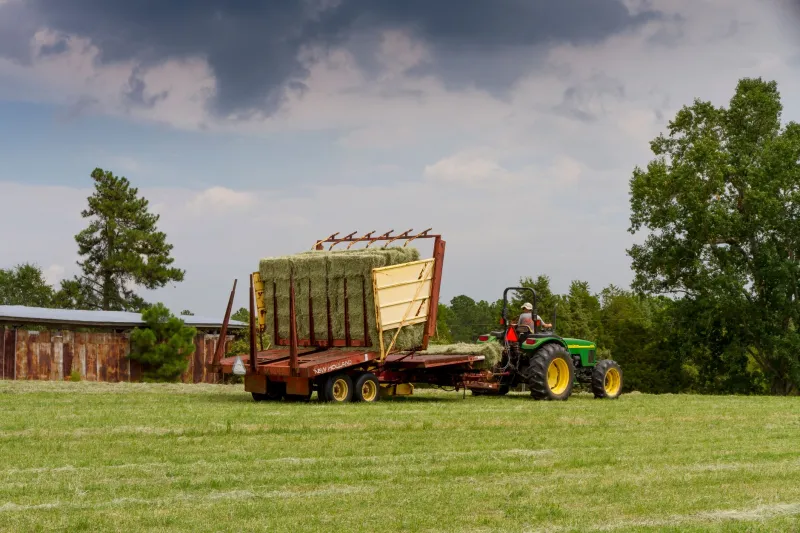
Sometime in the 1890s, a farmer in rural Pennsylvania reportedly predicted a late-season blizzard with enough precision that his neighbors moved their livestock three days before the storm hit. The U.S. Weather Bureau, newly established and eager to demonstrate its authority, had forecast mild conditions.
The farmer was right. The bureau was wrong. And nobody who lived through that winter forgot it.
The Forecasters Nobody Appointed
Before meteorology became an institutional science with satellites, supercomputers, and certified specialists, weather prediction in America was a distributed, fiercely competitive enterprise. On one side: the federal government's Weather Bureau, founded in 1870 and staffed by trained observers armed with barometers, thermometers, and telegraph networks. On the other: a sprawling informal ecosystem of almanac publishers, long-farming veterans, and self-educated atmospheric observers who had been reading the sky since before the bureau existed.
These unofficial forecasters weren't cranks. Many had spent decades developing systematic observation practices that, while methodologically different from academic meteorology, drew on genuinely useful patterns. They tracked animal behavior, plant phenology, cloud formations, wind shifts, and barometric changes with the same obsessive consistency that modern data scientists bring to their dashboards — just with notebooks instead of servers.
And they published. Regional almanacs were enormously popular in 19th and early 20th century America, with some titles claiming circulations that rivaled major newspapers. Farmers in particular relied on them for planting and harvest timing in an era when a mistimed frost could mean the difference between a profitable year and a ruinous one.
The Legitimate Science Behind the Folklore
It's tempting to dismiss these forecasters as lucky guessers operating on superstition. That's largely how institutional meteorology chose to frame them once the field had enough credibility to do so. But the actual methods of the better practitioners were more defensible than that framing suggests.
Many long-range predictions were based on what we'd now call teleconnection patterns — the observation that certain atmospheric conditions in one region tend to correlate with specific weather outcomes weeks later in another. Farmers who had worked the same land for decades had essentially accumulated multi-generational datasets on these patterns, encoded in the form of rules of thumb, sayings, and calendar observations.
The phenological approach — using biological indicators like tree budding, insect emergence, and migratory bird arrival as proxies for atmospheric conditions — has since been validated by climate scientists as a genuine measurement tool. When an old-timer said the woolly bear caterpillar's stripe width predicted winter severity, they were describing an observation that, while imperfect, pointed toward real correlations between late-season insect development and coming cold patterns.
None of this made them more accurate than modern meteorology. But it made them considerably more accurate than their critics were willing to admit.
The Bureau's Problem With Competition
The Weather Bureau had a complicated relationship with these informal forecasters from the start. Early bureau leadership recognized that public trust in weather prediction was a fragile commodity, and that every time a local almanac maker outperformed an official forecast, it cost the institution credibility.
The response was partly scientific and partly political. Bureau officials published critiques of almanac forecasting methods. They lobbied for legislation — ultimately successful in some states — that restricted the publication of long-range weather predictions without official sanction. They cultivated relationships with newspapers that helped position the bureau as the only reliable source of atmospheric information.
Some of this was legitimate scientific skepticism. Long-range forecasting genuinely is harder and less reliable than short-range prediction, and some almanac makers were selling confidence they hadn't earned. But the campaign also swept up practitioners whose methods and track records deserved more serious engagement than dismissal.
By the mid-20th century, the informal forecasting tradition had been largely pushed to the cultural margins. The almanac publishers who survived did so by leaning into nostalgia and entertainment value rather than competing directly with institutional meteorology. The serious practitioners either faded into obscurity or quietly retired.
What Died With Them
Here's the part of the story that actually matters: a significant body of observational knowledge went with them.
The patterns these forecasters had documented — sometimes across multiple generations of careful watching — existed almost entirely in human memory and in publications that nobody thought to systematically archive. When the practitioners died and the almanacs stopped being taken seriously, the knowledge dispersed.
Contemporary climate researchers have occasionally stumbled across this problem when trying to reconstruct pre-instrumental weather records for specific regions. The best available data sometimes comes from old almanacs and the diaries of farmer-observers — sources that the academic literature spent decades training scientists to ignore.
There's also the question of hyperlocal knowledge. The Weather Bureau, by design, operated at a scale that smoothed over regional and microclimate variation. A farmer who had spent forty years watching how weather moved through a particular valley had information that no regional forecast could capture. That information was genuinely useful to the people who lived in that valley. And it's gone.
The Forecast You Can't Download
Modern meteorology is extraordinary. The accuracy of short-range forecasts today would have looked like magic to anyone living a century ago. None of what follows is an argument against it.
But there's something worth sitting with in the story of these forgotten forecasters. The process by which their knowledge was dismissed wasn't purely scientific — it was also institutional, competitive, and shaped by the politics of professional legitimacy. Some of what got thrown out was genuinely worth keeping.
A few researchers are now working to recover pieces of it. Phenological databases. Digitized almanac archives. Oral history projects in agricultural communities. It's painstaking work, and a lot has already been lost past recovery.
The old farmer in Pennsylvania who saw that blizzard coming — he didn't have a model. He had forty winters of watching the same sky. That turned out to be worth something. It's just that nobody thought to ask him how he knew until it was too late.