Degrees to Dust: The Hundreds of American Colleges That Disappeared Before Anyone Could Stop Them
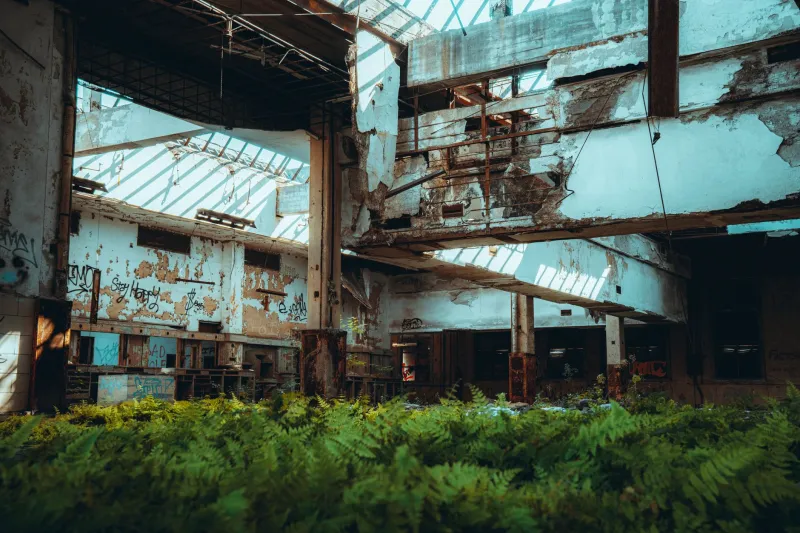
Somewhere in rural Ohio, a cornfield sits on top of what was once a library. The building is long gone, but old county maps still label the land with a name almost nobody recognizes — the site of a college that opened in 1853, graduated maybe two classes of students, and collapsed so quietly that local historians didn't bother writing it down.
This is not an unusual story. It's just one that rarely gets told.
Before the Morrill Act of 1862 formalized land-grant universities and before accreditation bodies started separating legitimate institutions from wishful thinking, America was absolutely teeming with small colleges. Religious denominations planted them like seeds across the frontier. Town boosters built them as civic trophies. Reformers launched them as social experiments. And the vast majority of them — somewhere between 700 and 800 institutions by some estimates — simply ceased to exist before the twentieth century arrived.
The Great College Boom Nobody Remembers
It's hard to overstate how optimistic early Americans were about higher education. In the decades between 1820 and 1860, colleges were opening at a pace that would look reckless by modern standards. Every denomination wanted its own institution. Every ambitious small town wanted to be the next New Haven.
Methodists, Presbyterians, Baptists, and Catholics each launched dozens of colleges across the expanding frontier. Some were genuinely serious academic endeavors. Others were closer to glorified high schools with pretensions. Many occupied a murky middle ground — earnest, underfunded, staffed by a handful of overworked faculty, and perpetually one bad harvest away from closing.
The historian Daniel Boorstin once called this period "the great American college rush," and the comparison to the gold rush isn't entirely unfair. Everyone believed they were sitting on something valuable. Most of them were wrong.
What Actually Killed Them
The causes of collapse were varied and sometimes almost poignantly mundane.
The Civil War devastated dozens of Southern institutions almost overnight. Male enrollment evaporated, endowments dried up, and some campus buildings were converted into hospitals or barracks. Colleges that had operated on the barest financial margins simply couldn't survive four years of economic disruption. Many never reopened.
In the Midwest and West, the culprit was often geography. A college that seemed well-positioned in 1855 could find itself stranded when a railroad chose a different route five years later. Without rail access, a town's economic future dimmed fast — and the college usually followed.
Some institutions died of nothing more dramatic than bad timing. They opened during a period of local prosperity, recruited a small student body, and then watched their funding base evaporate during one of the era's frequent economic panics. The Panic of 1873 alone is credited with finishing off dozens of already-struggling schools.
And then there were the ones that simply lost the argument about what a college should be. As professional accreditation standards tightened in the late 1800s, institutions that couldn't meet minimum requirements for faculty credentials, library holdings, or curriculum rigor were quietly pushed out of the category entirely.
A Few Worth Remembering
Oglethorpe University in Georgia — not the current institution, but its predecessor — closed during the Civil War and sat dormant for decades before a determined group of alumni revived it in the 1910s. Most lost colleges weren't that lucky.
 Photo: Oglethorpe University, via oglethorpe.edu
Flemingsburg College in Kentucky operated from 1849 to sometime in the 1870s, leaving behind almost no records beyond a few newspaper advertisements seeking students. Soule University in Texas opened in 1856, survived the Civil War years with difficulty, and eventually merged into what became Southwestern University — one of the luckier outcomes.
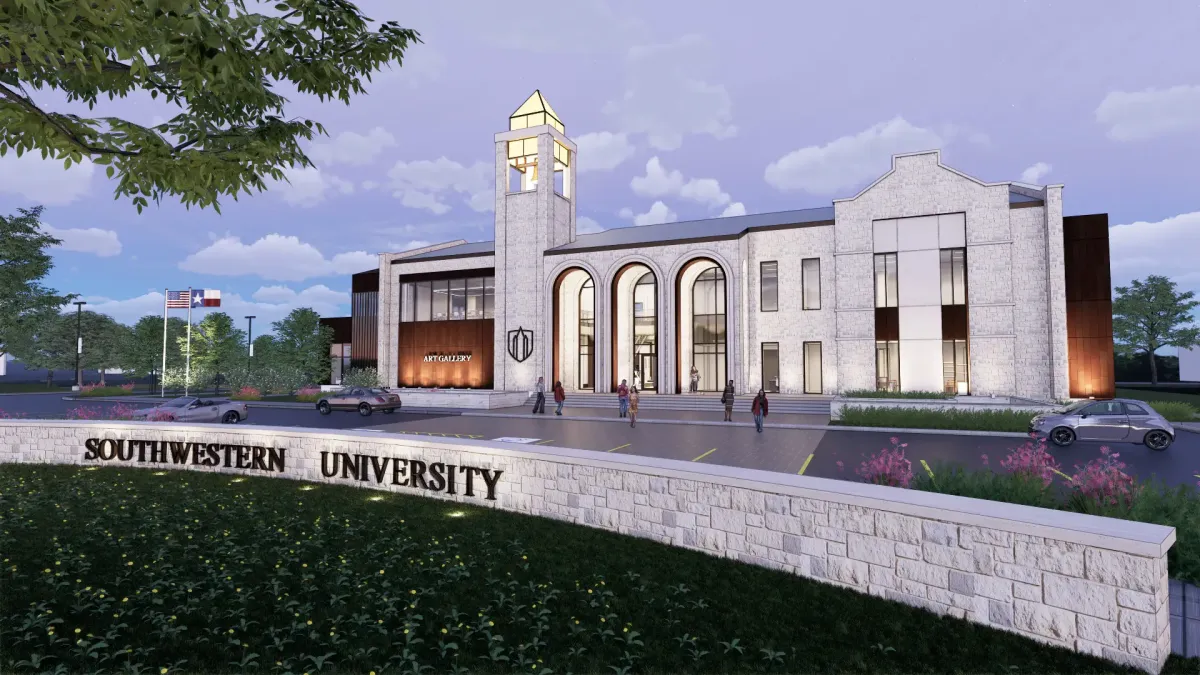 Photo: Southwestern University, via www.linbeck.com
Then there's New Athens College in Illinois, which operated for a stretch in the mid-1800s and produced graduates who went on to reasonably notable careers, only to be absorbed by larger institutions and eventually forgotten entirely. The town of New Athens still exists. The college does not, and the local historical society's files on it are thin.
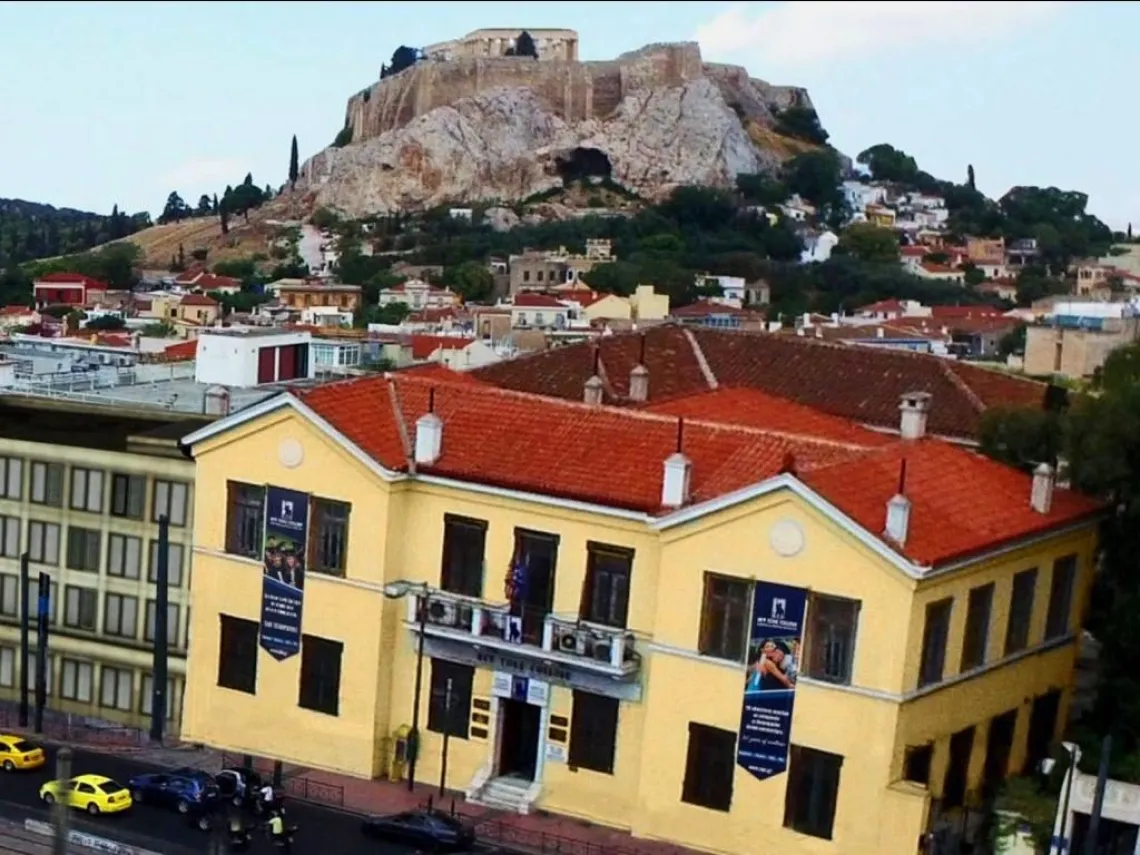 Photo: New Athens College, via www.athens24.com
What the Ruins Actually Tell Us
Some of these campuses left physical traces — a foundation outline visible from the air, a repurposed building that still carries a faint ghost of its original architecture, a cemetery plot where faculty members were buried. Others vanished so completely that their existence survives only in old newspaper archives and county deed records.
But the physical absence is almost beside the point. What these lost colleges represent is a particular American faith — the belief that if you built the institution, the future would eventually justify it. Communities scraped together resources they could barely spare to construct buildings, hire professors, and recruit students, all in the conviction that education was the engine of everything else worth having.
They weren't entirely wrong. The colleges that survived — many of them launched under identical circumstances — did transform their communities. The ones that didn't survive were often indistinguishable from their successful neighbors in ambition and sincerity. They were just unlucky.
The Experiment Worth Revisiting
There's a modern tendency to read these vanished institutions as cautionary tales about overreach, about communities trying to build more than their circumstances could support. That reading isn't unfair, but it misses something.
The lost colleges of pre-Civil War America were, at their best, genuine attempts to imagine what learning could look like outside the established Eastern elite institutions. Some were coeducational before coeducation was common. Some were racially integrated in places and moments where that took real courage. Some offered curricula that leaned practical and vocational rather than classical — anticipating arguments about higher education that we're still having today.
They were experiments. Most experiments fail. That doesn't make the hypothesis wrong.
Somewhere under that Ohio cornfield, the library's foundation stones are probably still there. Nobody's going to dig them up. But it seems worth knowing they exist — and worth asking what the people who laid them were actually trying to build.