Hollywood Goes to War: The Fake Cities That Kept Nazi Bombers Chasing Shadows
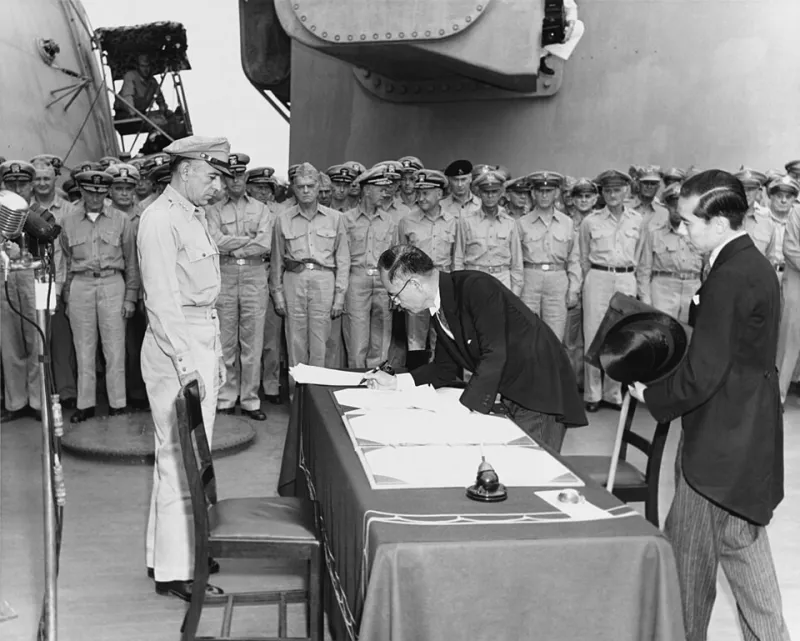
Photo: Army Signal Corps photographer LT. Stephen E. Korpanty; restored by Adam Cuerden, Public domain, via Wikimedia Commons
Somewhere in the California desert, in the anxious months after Pearl Harbor, a crew of carpenters, painters, and set dressers showed up to work on what looked like a massive film production. There were fake buildings, painted rooftops, and carefully arranged smudge pots designed to mimic the haze of industrial smoke. The difference was that no cameras were rolling. The audience they were performing for flew at thirty thousand feet, and the goal wasn't applause — it was misdirection.
This is one of the strangest, least-told stories of the American home front: a full-scale collaboration between the U.S. military and the Hollywood film industry to build fake cities, fake oil refineries, and fake neighborhoods so convincing that enemy reconnaissance pilots would waste their bombs on empty desert and fields instead of the real facilities humming away just out of sight.
When the Studio Lot Became a War Room
After the attack on Pearl Harbor in December 1941, American military planners faced a terrifying vulnerability. The West Coast was lined with critical infrastructure — aircraft plants, oil refineries, shipyards — that couldn't exactly be moved underground. What they could do, someone reasoned, was make the real things invisible and the fake things irresistible.
The Army Corps of Engineers turned to an unlikely partner: the movie industry. Studios like Lockheed hired set designers, prop masters, and art directors who spent their days building fake New York streets and alien planets to instead build fake industrial complexes. The logic was straightforward. If anyone knew how to make something look real from a distance, it was the people who did it for a living.
The most famous example was the camouflage operation at Lockheed's Burbank aircraft plant, one of the country's most important military manufacturing sites. The entire facility — over a million square feet of factory floor — was hidden beneath a fabric canopy designed to look like a quiet California suburb from the air. Fake houses were constructed on top of the roof. Rubber cars sat in driveways. Fire hydrants, trees made from chicken wire and painted burlap, and clotheslines with laundry were arranged to complete the illusion. Viewed from above, it looked like a sleepy residential neighborhood. Down below, workers were building P-38 fighters around the clock.
The Art of the Decoy
Camouflage was only half the strategy. The other half was active deception — building fake versions of real targets nearby, hoping that bombers would strike the dummy instead of the original.
Near refineries and industrial plants across California and the Pacific Northwest, engineers constructed decoy facilities using canvas, pipe scaffolding, and wood. Fake oil storage tanks were built from lumber and painted to cast the right shadows from altitude. Smudge pots were arranged to produce plumes of smoke that mimicked active industrial operations. At night, carefully controlled lighting patterns were designed to suggest a working facility while the real plant nearby went dark.
The level of detail was remarkable. Military planners understood that aerial reconnaissance wasn't just about shape — it was about shadow, texture, and the subtle visual signatures that industrial activity leaves behind. Decoy builders had to think like their enemy's intelligence analysts, which meant thinking like film directors who understood how light and angle create the illusion of depth and reality.
Some of the most elaborate decoys were built in the Pacific Northwest, where Boeing's Seattle plant and nearby infrastructure were considered prime targets. Entire fake neighborhoods were constructed on the roof of the Boeing facility, similar to the Lockheed operation, while dummy industrial sites were positioned in surrounding areas to draw attention away from the real thing.
The Men Behind the Curtain
The names of most people involved in these projects have been largely forgotten, which is part of what makes the story so fascinating. These weren't celebrated generals or decorated heroes. They were art directors, prop builders, and set painters who traded studio backlots for military contracts and spent the war years constructing the most consequential fake cities in American history.
One notable figure was John Stewart Detlie, a Hollywood art director who worked on camouflage projects for the military. He was among a cohort of film industry professionals who brought a genuinely different way of thinking to military engineering — not just technical problem-solving, but a visual intelligence that asked how something appears rather than just how it functions.
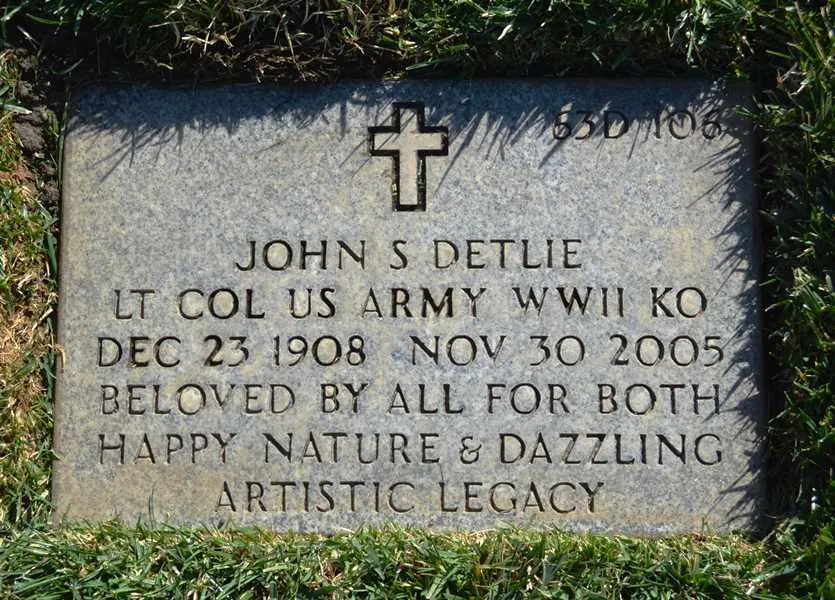 Photo: John Stewart Detlie, via images.findagrave.com
The broader collaboration between the entertainment industry and the war effort is usually remembered through bond drives and USO shows. The decoy city program represents a far stranger, more operationally significant contribution — one that combined the stagecraft of Hollywood with the existential urgency of industrial warfare.
An Illusion That Actually Worked
Whether the decoys were ever directly responsible for misdirecting enemy aircraft is difficult to prove with certainty, since the West Coast was never actually bombed in a sustained campaign. But that absence is itself part of the story. The threat was real enough that the military committed enormous resources to the deception program, and the facilities it protected continued producing the planes, ships, and equipment that ultimately won the war.
What's striking, looking back, is how the program reveals something genuinely American about the wartime response — the instinct to solve a military problem with creativity and showmanship, to meet the threat of destruction with the tools of illusion. When the enemy looked down, they saw a quiet suburb, a patch of empty industrial land, a smudge of smoke rising from nothing. The real America was hidden just out of frame, building the future in plain sight.