The Last Official Act: When American Towns Chose to Erase Themselves
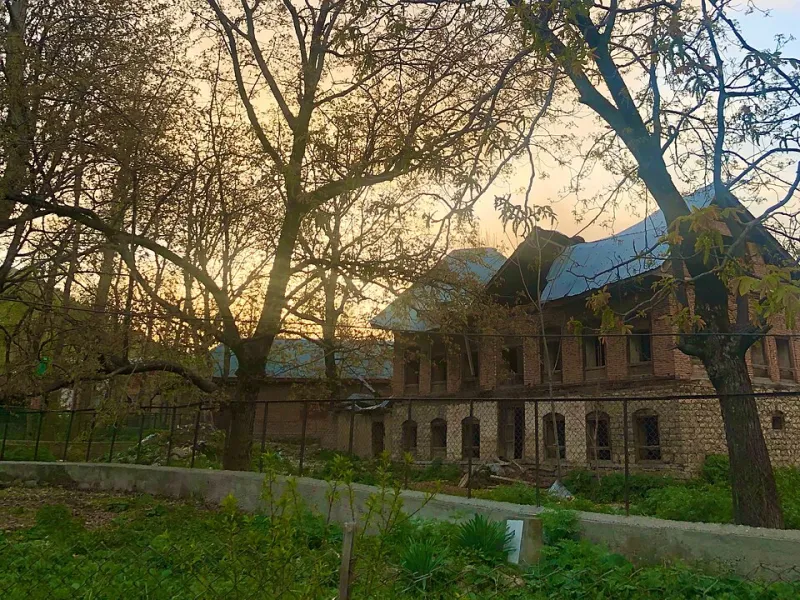
Photo: UnpetitproleX, CC BY-SA 4.0, via Wikimedia Commons
There's a Specific Kind of Quiet in a Town That Chose to Stop
Most places don't announce their endings. They just gradually thin out — a hardware store closes, the school consolidates with the next county over, the post office loses its zip code. The decline is so incremental that nobody can point to the exact moment a community stopped being a community.
But every so often, a town does something stranger and, in its own way, more dignified. It calls a meeting. It debates. And then it votes to legally cease to exist.
Disincorporation — the formal dissolution of a municipality — is a real and surprisingly underused mechanism in American civic law. Towns can vote themselves out of existence, surrendering their charters, disbanding their local governments, and returning administrative authority to the surrounding county. It's a quiet, bureaucratic act with enormous psychological weight. And the stories behind the communities that chose it reveal something uncomfortable about the limits of the American belief that any problem, including dying, can be solved with enough determination.
Why a Town Would Even Consider It
The reasons communities reach for disincorporation tend to cluster around a handful of painful circumstances.
Flood is a common one. Towns built in river valleys or low-lying coastal areas have occasionally faced the brutal arithmetic of repeated disaster — the cost of rebuilding exceeds the assessed value of everything that was destroyed, and federal disaster assistance comes with conditions that make long-term recovery unrealistic. At some point, the remaining residents face a choice between maintaining a legal fiction of municipal existence or accepting reality and moving on.
Industrial collapse drives others. When the single employer that built a town — a mine, a mill, a military installation — closes or relocates, the tax base can evaporate almost overnight. Municipal governments that can no longer pay for basic services like road maintenance, water treatment, or emergency response face genuine legal and ethical liability. Dissolution can be the responsible choice, not the defeatist one.
Then there are the towns that dissolve simply because the overhead of being a town isn't worth it anymore. Incorporation requires maintaining elected officials, filing state reports, holding regular meetings, and meeting a cascade of regulatory requirements. For a community of a few hundred people with no particular reason to maintain independent governance, the county can often provide the same services more cheaply.
The Stories Behind the Decisions
The specifics vary wildly. In the Midwest, small agricultural communities that boomed during the homestead era and shrank through the twentieth century as farm consolidation reduced the number of families needed to work the same land have quietly disincorporated by the dozens. Iowa, Nebraska, and Kansas have each seen multiple municipalities surrender their charters over the past few decades, often with local newspaper coverage so brief it barely registers as news.
In Appalachia, coal towns built as company communities sometimes found themselves legally incorporated as municipalities long after the company had left and the population had scattered. Maintaining that civic structure — electing mayors and council members for a town of 200 people with a collapsing tax base — served nobody. Dissolution returned the territory to county jurisdiction and, in some cases, made the community eligible for rural development funding it couldn't access as an incorporated municipality.
And then there are the stranger cases. Towns that dissolved over internal political conflicts so bitter that residents decided they'd rather have no government than continue fighting over a broken one. Communities that incorporated in the first place only to avoid annexation by a neighboring city, then dissolved when the annexation threat passed and the administrative burden became pointless.
Each situation is specific. Each vote was real, conducted by real people who had to look at their neighbors across a meeting room and decide together that the thing they'd built wasn't worth maintaining anymore.
What the Empty Squares Actually Reveal
There's a particular landscape that former incorporated towns leave behind. Sometimes it's obvious — an old municipal building repurposed as a community center or left to deteriorate, a water tower with a town name that no longer appears on official maps, a cemetery maintained by a historical society because there's no longer a local government to fund it.
More often it's subtle. A slight widening in the road where a main street used to draw traffic. A cluster of older buildings set closer together than the surrounding rural landscape would suggest. A church that's larger than the current population could possibly fill.
These remnants are different from the traces left by towns that simply faded. A dissolved town made a decision. Someone stood up at a meeting and said, essentially, that the story was over and it was time to acknowledge it. That act of collective recognition — uncomfortable, pragmatic, and quietly courageous — is almost entirely absent from the way Americans usually talk about community and decline.
The Optimism We Don't Talk About
American civic mythology runs strongly toward persistence. Towns are supposed to fight back, attract new investment, reinvent themselves. The narrative of the comeback is deeply embedded in how we think about place and identity.
Disincorporation challenges that story not by rejecting optimism, but by redefining it. The communities that voted to dissolve weren't giving up on their residents — many of whom stayed in the same houses, on the same roads, in the same landscape. They were giving up on a particular administrative structure that had stopped serving anyone.
That distinction matters. The people remained. The place remained. What ended was the legal fiction of municipal independence, and with it, the financial and bureaucratic burden of maintaining a government for a community that had changed beyond what that government was designed to serve.
Somewhere in that pragmatic, unglamorous act is a kind of honesty that the more celebrated stories of American persistence rarely manage. The towns that voted themselves out of existence knew something that booster culture doesn't like to admit: that the form a community takes should serve the people in it, not the other way around.