What the River Was Saying: The Appalachian Flood Readers Who Knew Before the Gauges Did
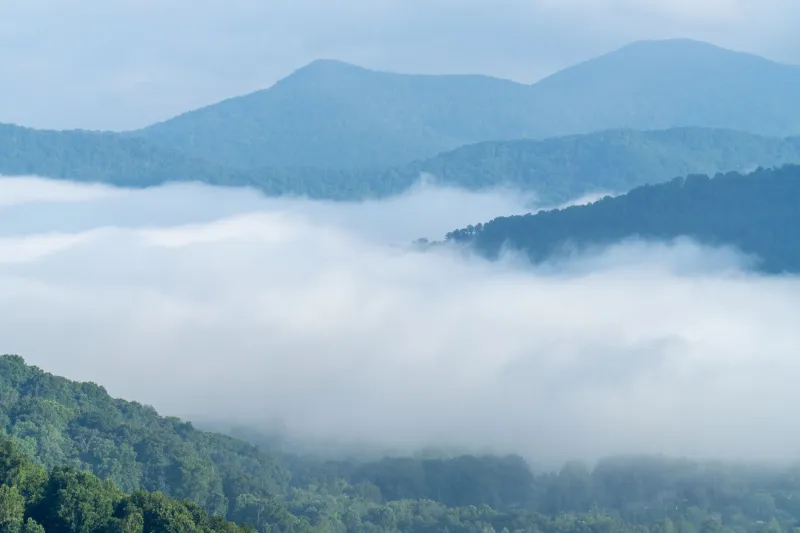
Somewhere in the mid-1800s, a woman in a hollow along the Cheat River in what is now West Virginia walked out to her back field before dawn, pressed her palm into the soil near the water's edge, and told her husband to move the livestock uphill. Three days later, the river jumped its banks and swallowed the lower pasture. No telegraph warning. No government alert. Just a smell in the dirt and decades of inherited knowing.
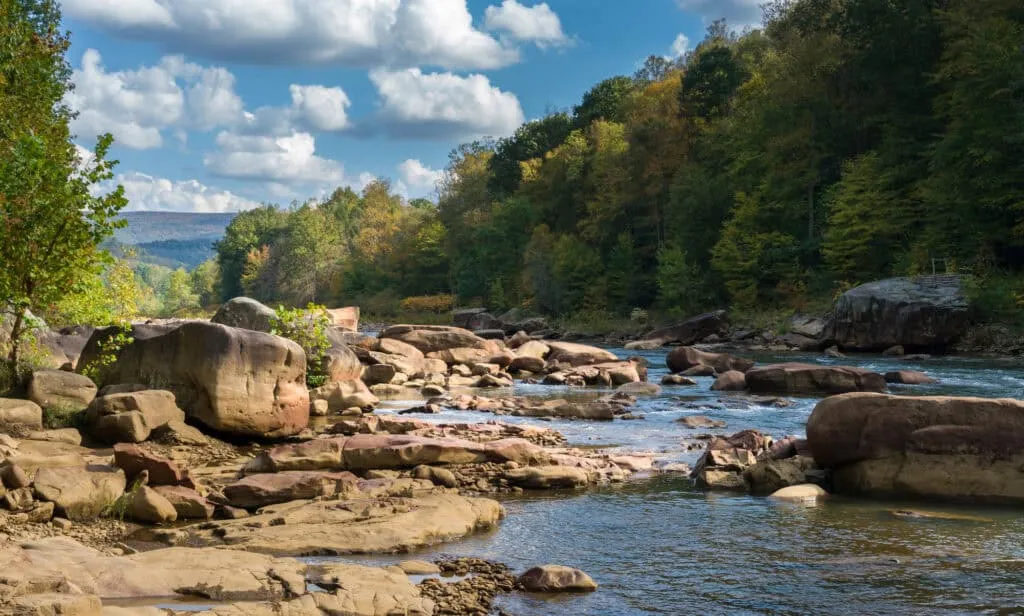 Photo: Cheat River, via www.mapofus.org
This kind of story wasn't rare in Appalachian river communities. It was Tuesday.
The Corps Didn't Come First
When most Americans think about flood prediction, they picture federal infrastructure — the Army Corps of Engineers, NOAA river gauges, satellite imagery. That system is real and genuinely saves lives. But it's also surprisingly young. Formal federal flood control along Appalachian waterways didn't arrive in any meaningful way until the early twentieth century, and even then it was uneven and slow.
The communities living in the river hollows of West Virginia, Kentucky, Tennessee, and western North Carolina didn't wait. They built their own system — not with instruments, but with attention.
For generations, families along rivers like the New, the Tug Fork, the Clinch, and the Nolichucky developed what can only be described as a hyperlocal environmental intelligence network. They read the landscape the way a skilled mechanic reads an engine: through accumulated pattern recognition, passed down through storytelling and direct mentorship.
The Signs They Tracked
The indicators these communities relied on were specific, consistent, and — critically — not random folklore. Many of them have since been validated by environmental science, which makes the story considerably more interesting.
Beaver behavior was among the most closely watched. Families living near beaver-populated streams knew that beavers begin frantically reinforcing and heightening their dams in the days before major rain events. Exactly why is still debated, but the behavior is real and documented. Appalachian families treated sudden beaver activity as a reliable early warning, sometimes giving them two to three days of lead time before serious flooding.
Soil smell was another signal. The earthy, intensely mineral scent that rises from waterlogged ground — now understood to be caused by a compound called geosmin released by soil bacteria under pressure — was recognized as a pre-flood indicator. When the ground near the river started smelling sharply of deep earth without recent rain, experienced residents took notice.
Moss and lichen patterns on riverside trees were read for long-range seasonal prediction rather than immediate warning. Thicker growth on the upstream-facing side of trunks, or unusual spreading of moss toward the waterline, suggested that the soil had been holding more moisture than normal through the previous season — a sign that spring snowmelt or heavy autumn rains would have nowhere to go.
Bird and frog behavior rounded out the picture. An unusual silence from frogs along a creek, or large flocks of low-water birds moving suddenly upland, was treated seriously. These weren't poetic metaphors. They were data points.
How the Knowledge Survived
What's remarkable isn't just that these communities developed these indicators — it's how they preserved them. The Appalachian oral tradition surrounding flood reading was woven into everyday conversation, not treated as formal instruction. Grandmothers mentioned it while shelling beans. Fathers pointed things out while walking fields with their children. The knowledge transferred through proximity and repetition, not curriculum.
Some of it survived in what folklorists call "weather proverbs" — short, memorable phrases that encoded specific environmental observations. But researchers who have gone back to collect and analyze these sayings have found that many of them, stripped of their rhyme, describe genuinely observable phenomena with reasonable accuracy.
Community memory also played a structural role. River families kept informal mental records of past floods, often tied to family events — "the year Aunt Vera's baby was born, the Clinch came up to the smokehouse door." These personal chronologies, shared across households, gave communities a rough but functional historical dataset for understanding flood cycles.
What Modern Hydrologists Are Noticing
Here's where the story gets quietly fascinating. In recent years, a growing number of environmental researchers have started revisiting the idea of bioindicators — non-human species whose behavior reliably signals environmental change. The beaver work is particularly active. Studies examining beaver dam-building patterns before significant precipitation events have produced intriguing results, enough to warrant continued research.
Geosmin, the compound behind that pre-flood soil smell, is now well understood chemically. Whether it can serve as a practical early-warning indicator in the way Appalachian communities used it is an open research question — but it's a question scientists are actually asking.
There's even a growing subfield called ethnohydrology, which formally studies traditional water knowledge held by indigenous and rural communities. Appalachian flood reading fits squarely into this framework, though it remains understudied compared to similar traditions in other parts of the world.
What Was Actually Lost
The arrival of federal flood management did something complicated to this knowledge. It saved lives, no question. But it also quietly displaced the community-level expertise that had developed over generations, replacing distributed local knowledge with centralized institutional authority. When the gauges went in and the radio warnings started coming, the old signals stopped being passed down. Within two or three generations, much of it was simply gone.
What those Appalachian families had built wasn't primitive guesswork. It was empirical science conducted without laboratories, peer review, or funding — just survival stakes high enough to make accuracy matter. The river was always talking. They just learned, over generations, how to listen.
Some of that conversation is worth picking back up.