The Ordinary Buildings That Were Actually Listening to the Entire World
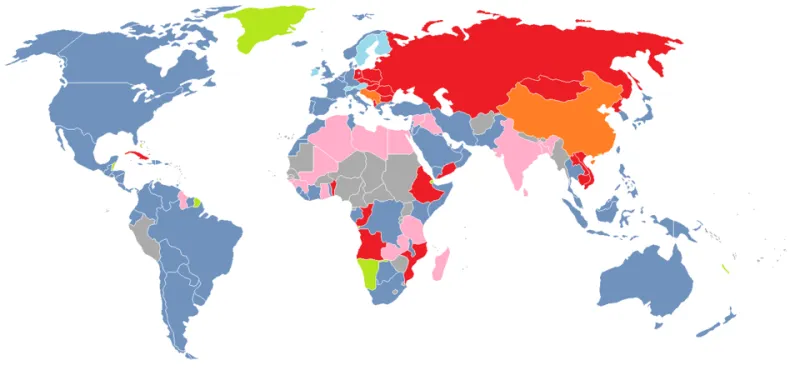
Photo: J intela, CC BY-SA 3.0, via Wikimedia Commons
There's a low, flat building on the edge of a small town in upstate New York that has been a self-storage facility since the mid-1980s. Before that, it was something else — something the town never quite understood, even when it was operating. The antenna array that once surrounded it was dismantled quietly, over a single weekend, sometime in 1982. The workers who removed it didn't talk to anyone in town. By Monday morning, it looked like an empty lot.
The building is still there. There's no plaque. There's no historical marker. If you ask the storage facility's owner about the property's history, she'll tell you she bought it from a government contractor and that the paperwork didn't say much.
This is a more common story than you might expect.
The Architecture of Eavesdropping
During the height of the Cold War, the United States operated one of the most extensive signals intelligence networks ever assembled — and a significant portion of it was hiding in places that looked aggressively mundane. The logic was straightforward: a facility that looked like a warehouse or a commercial radio station attracted far less attention than one that looked like what it actually was.
The National Security Agency, the Army Security Agency, and a constellation of smaller intelligence bodies operated listening posts that were deliberately designed to blend into their surroundings. Some were built on hilltops where the elevation improved reception. Others were positioned near coastlines to intercept transmissions coming across the Atlantic or Pacific. A surprising number were embedded in suburban commercial zones, their antenna arrays disguised or minimized to avoid drawing the eye.
 Photo: National Security Agency, via cdn.freebiesupply.com
The people who worked inside these facilities often couldn't tell their families what they did. The people who lived next door usually had no idea what was happening on the other side of the fence.
What They Were Actually Doing
The work inside these stations ranged from the technically impressive to the tediously methodical. Operators monitored specific radio frequencies around the clock, recording transmissions that might carry coded military communications, diplomatic traffic, or early warning signals of weapons tests. Linguists transcribed and translated. Analysts looked for patterns in the noise.
During the Cuban Missile Crisis in 1962, facilities like these were operating at maximum capacity, tracking Soviet naval communications and monitoring Cuban military frequencies for any sign of escalation. The intelligence they generated fed directly into the White House situation room. The people doing the work were sitting in buildings that, from the outside, looked like they might be regional offices for an insurance company.
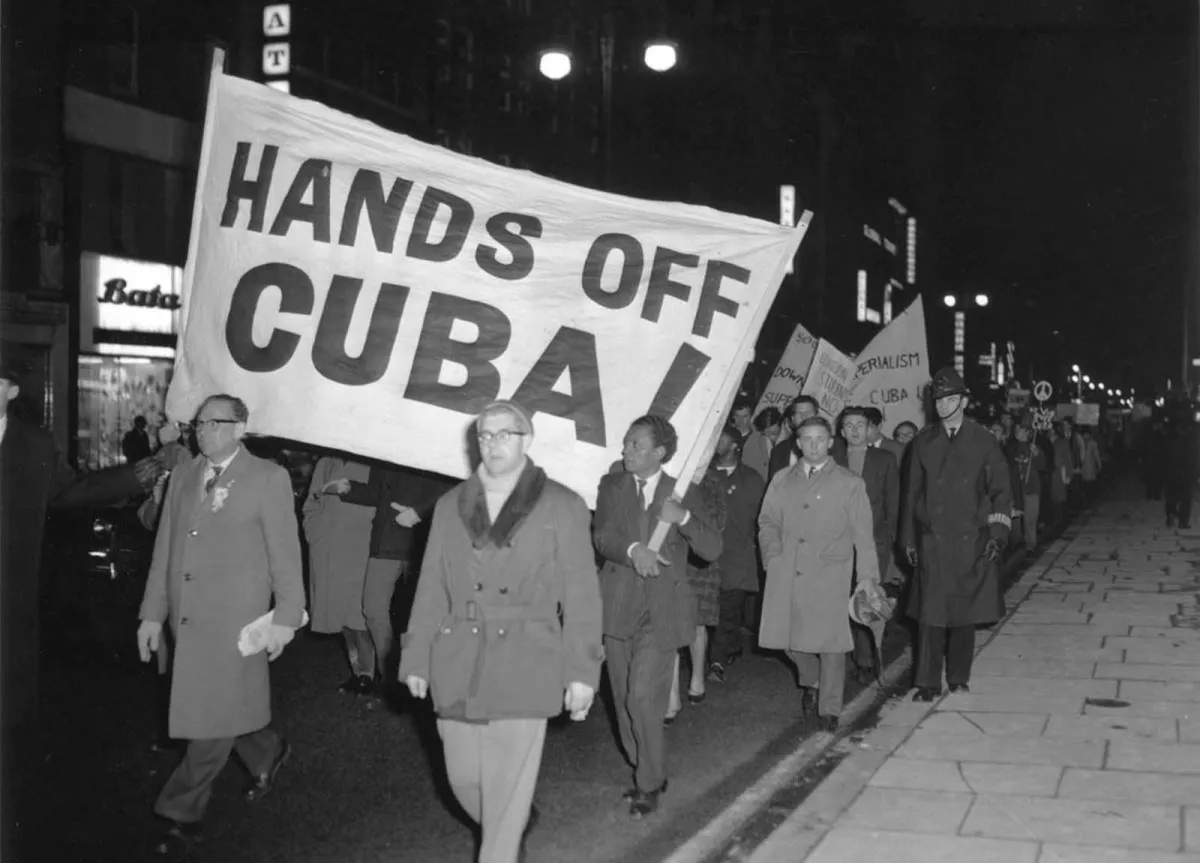 Photo: Cuban Missile Crisis, via 3.bp.blogspot.com
Other stations had more specialized functions. A network of monitoring posts maintained by the Atomic Energy Commission tracked atmospheric radiation levels globally, looking for signs of Soviet nuclear tests. These facilities were often positioned at universities and research institutions, their equipment sharing space with legitimate scientific instruments in a way that made the distinction difficult to establish from the outside.
The SOSUS network — a system of underwater hydrophones designed to track Soviet submarines — was coordinated through shore-based facilities that were similarly understated in appearance. The technology was extraordinary. The buildings housing it were not.
The Civilians Who Lived Beside History
One of the genuinely strange aspects of this history is how close ordinary American life ran alongside it. Families bought houses in subdivisions adjacent to listening posts without knowing what their neighbors were doing. Children played in backyards within earshot of facilities processing some of the most sensitive intelligence in the country.
In some cases, the presence of a facility was an open secret at the local level — people knew something was happening, even if they didn't know what. Former residents of communities near known NSA installations have described a particular quality to the silence around those buildings: the way nobody who worked there talked about it, the way the parking lots filled and emptied on schedules that didn't quite match normal business hours, the way the buildings seemed to require more electrical power than their apparent function could justify.
Other facilities maintained their cover so effectively that even longtime neighbors had no suspicions. A listening post operating as a commercial radio relay station in the Midwest was, by all accounts, genuinely indistinguishable from the real thing to anyone passing by. The cover wasn't a thin disguise — it was a fully operational second identity.
What the Buildings Look Like Now
The decommissioning of the Cold War signals intelligence network happened gradually, accelerating after 1991, as satellite technology and digital interception methods made many of the ground-based facilities obsolete. The physical infrastructure was disposed of in the most practical ways available — sold to private buyers, transferred to other government agencies, or simply abandoned.
The results are scattered across the American landscape in ways that are occasionally visible to the attentive eye. The self-storage facility in upstate New York. A church in suburban Virginia that occupies a building whose concrete construction is considerably more robust than a congregation of its size would typically require. An office park in the mid-Atlantic whose layout, if you look at it on satellite imagery, still bears the ghost of an antenna field in the spacing of its parking lots.
Historical markers are rare. The NSA and its predecessor agencies were not, as a general rule, interested in leaving documentation trails, and the Cold War's end didn't produce a sudden enthusiasm for transparency about facilities that had operated under strict classification.
Why It Matters That We Don't Know
There's a particular quality to secret history that's embedded in physical space — it changes the way you experience the landscape once you know it's there. The unremarkable building becomes remarkable. The ordinary suburban street becomes a thread in something much larger.
The Cold War listening network is a reminder that the most significant infrastructure isn't always the most visible. The interstate highway system gets monuments and historical markers. The signals intelligence network that ran parallel to it, monitoring the same skies and coastlines, mostly got a quiet sale to a storage company and a weekend with a crew of workers who didn't talk to anyone in town.
The buildings are still out there. Some of them are listening to nothing now. Some of them, possibly, are not.