The Little Book That Mapped a Safer America: How Victor Green's Directory Became a Lifeline

Photo: Joe Haupt from USA, CC BY-SA 2.0, via Wikimedia Commons
A Travel Guide With Life-or-Death Stakes
Most travel guides tell you where to find a good meal or a comfortable bed. Victor Hugo Green's annual directory did that too — but it carried a weight that no AAA TripTik or Fodor's paperback ever had to bear. For the Black traveler navigating America between 1936 and 1966, the question wasn't simply where to find a nice hotel. It was where you could stop without being turned away, harassed, arrested on a pretext, or worse.
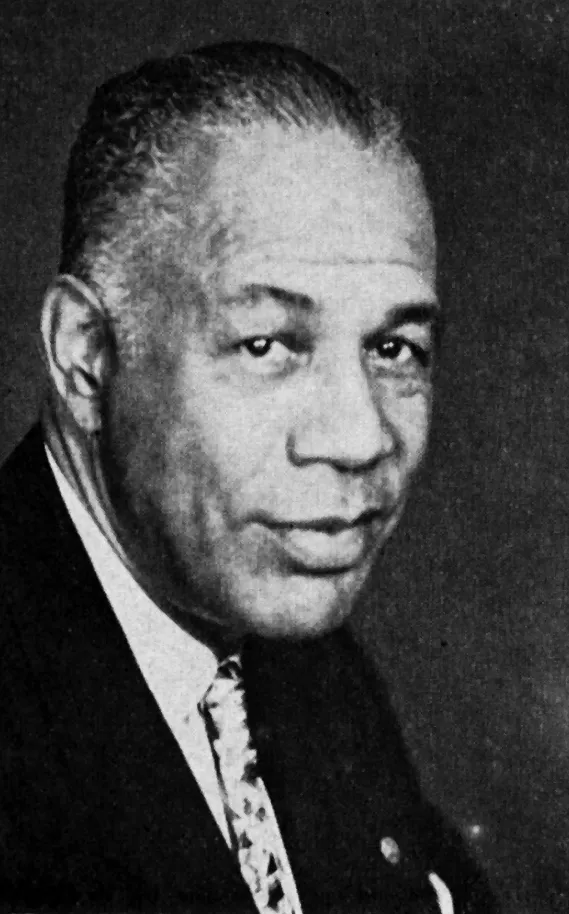 Photo: Victor Hugo Green, via cdn.history.com
The Negro Motorist Green Book — later shortened to just the Green Book — answered that question, city by city, state by state, year by year. And the fact that it needed to exist at all is one of the more clarifying lenses through which to look at mid-century American life.
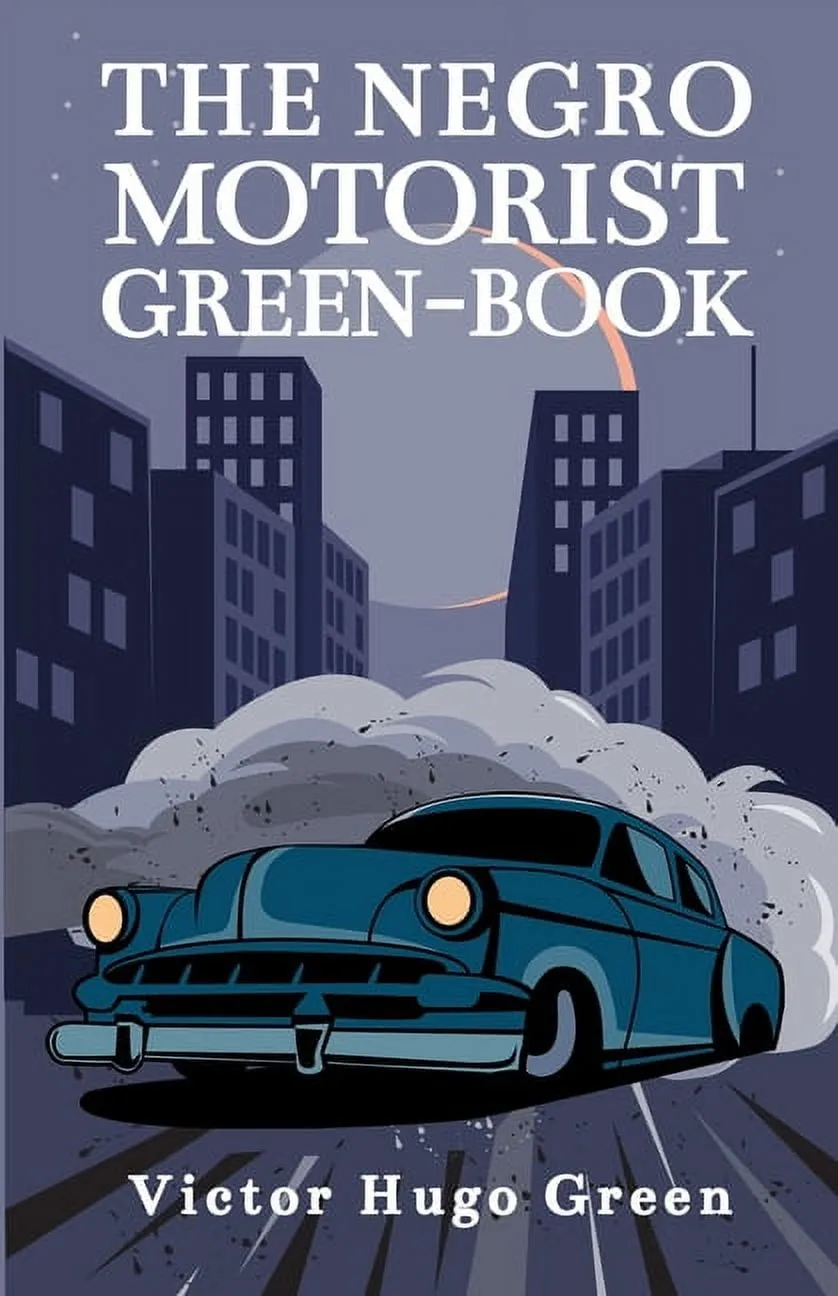 Photo: Negro Motorist Green Book, via i5.walmartimages.com
Victor Green and the Problem He Decided to Solve
Green was a mail carrier in Harlem when he published the first edition in 1936, initially covering New York City. The timing wasn't accidental. The 1930s saw a significant expansion of Black car ownership and long-distance travel, driven in part by the Great Migration and in part by a growing Black middle class with the means and desire to move through the country on their own terms.
The problem was that the infrastructure of American hospitality was built around exclusion. Hotels operated under Jim Crow policies not just in the South but in Northern cities that preferred to think of themselves as more enlightened. Gas stations in certain towns wouldn't serve Black customers. Restaurants posted signs, or simply refused service without explanation. Sundown towns — municipalities where Black residents were expected, sometimes by formal ordinance and sometimes by threat of violence, to be gone before dark — existed in virtually every state in the country, not just in the former Confederacy.
Green understood that information was protection. If you knew in advance which establishments would serve you, you could plan a route that didn't require you to discover the hostile ones through personal experience. The guide was, at its core, a tool for converting dangerous unknowns into manageable logistics.
The Network Behind the Listings
What made the Green Book work wasn't just Green's editorial vision — it was the distributed network of contributors who made the listings possible. Green leveraged the postal service's existing infrastructure, recruiting mail carriers in cities across the country to identify and verify Black-owned or Black-friendly businesses in their delivery areas.
This was genuinely clever. Mail carriers knew their neighborhoods in granular detail. They knew which businesses were owned by whom, which establishments had reputations for fair treatment, and which ones had histories that made them worth avoiding. By tapping into that existing knowledge network, Green could build a guide with national reach without needing a large editorial staff.
The businesses listed in the Green Book weren't all Black-owned, though many were. Some were white-owned establishments that had made a deliberate choice to serve all customers regardless of race — a decision that, in certain communities, carried real social and economic risk. Being listed in the Green Book was, for those business owners, a quiet act of alignment. It said something about who they were willing to serve and, by extension, who they were.
Beauty salons and barbershops appeared alongside hotels and restaurants. Private homes offering lodging — a practice Green called "tourist homes" — filled gaps in cities where even the Green Book couldn't find enough commercial establishments to meet demand. Churches sometimes served as informal waypoints. The guide mapped not just businesses but an entire informal infrastructure of Black hospitality that had developed precisely because the mainstream version wasn't available.
Thirty Years of a Changing America
The Green Book evolved significantly across its three decades of publication. Early editions focused heavily on the urban Northeast, where Green's networks were strongest. As the guide expanded its reach, it began covering Southern states in increasing detail — a reflection of both the migration patterns of its readers and the commercial ambitions of the publication.
The tone shifted subtly over the years too. Early editions carried a certain apologetic quality, framing the guide as a temporary necessity until racial equality made it obsolete. Later editions, published during the civil rights era, felt more matter-of-fact — less hopeful that the guide would soon be unnecessary, more focused on the practical task of keeping readers safe in a country that was changing slowly and unevenly.
Green himself died in 1960, and his wife Alma continued the publication until 1966, when the Civil Rights Act of 1964 had theoretically made the guide's core function — identifying which public accommodations would serve Black customers — legally moot. Discrimination in public accommodations was now illegal. The guide published its final edition and went silent.
The gap between legal change and lived reality is, of course, a story that extends well beyond 1966. But the Green Book's end marked a genuine symbolic moment: the acknowledgment that the formal architecture of exclusion had been dismantled, even if its informal successor was already taking shape.
The Geography It Quietly Documented
What the Green Book left behind, across thirty years of editions, is something that historians have only recently begun to fully excavate: a detailed, street-level map of racial geography in mid-century America. Which neighborhoods in which cities had concentrations of welcoming businesses. Which highway corridors were navigable and which were genuinely hazardous. Which states had enough listed establishments to make travel feasible and which were essentially blank spaces on the map.
That geography was never random. It reflected patterns of Black settlement, economic development, and community organization that mainstream American history largely ignored. The Green Book's listings cluster around the same neighborhoods that the Federal Housing Administration was simultaneously redlining — the places where Black Americans were being pushed by discriminatory policy and where, in response, they built parallel institutions that were in some ways more resilient than the mainstream alternatives.
The guide is a primary source for understanding that world. Not the world as civil rights legislation described it, or as its opponents defended it, but the world as ordinary people actually navigated it, one tank of gas and one night's lodging at a time.
Victor Green was a mail carrier with a mimeograph machine and a problem to solve. What he built, almost by accident, was one of the most honest documents of American life in the twentieth century.