The Neighborhood Alchemists: When Your Local Soda Jerk Was Actually Your Family Doctor
The Sweet Spot Where Medicine Met Main Street
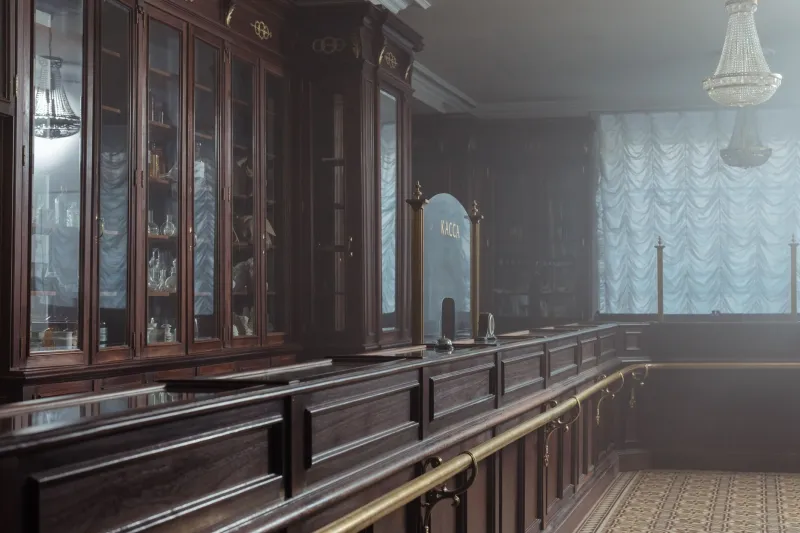
Walk into any modern pharmacy and you'll find fluorescent lights, automated dispensers, and a pharmacist trapped behind bulletproof glass. But rewind a century, and America's drug stores looked nothing like today's sterile chains. They were warm, bustling social hubs centered around ornate soda fountains, where the same person who knew exactly how you liked your ice cream float also kept detailed records of your family's medical history.
 Photo: Main Street, via 4.bp.blogspot.com
The marriage of medicine and carbonated beverages wasn't accidental—it was genius.
When Coca-Cola Was Actually Medicine
In the 1880s, most pharmaceutical preparations tasted absolutely terrible. Pharmacists discovered that carbonated water, flavored syrups, and a touch of sweetness could make even the most bitter tonics palatable. What started as a practical solution to mask medicinal flavors evolved into an entire industry.
Dr. John Pemberton's original Coca-Cola formula contained cocaine-laced coca leaves and caffeine-rich kola nuts—marketed explicitly as a brain tonic and headache remedy. Pharmacist Caleb Bradham created Pepsi-Cola as a digestive aid. These weren't soft drinks that happened to be sold in pharmacies; they were medicines that happened to taste good.
 Photo: Dr. John Pemberton, via newsroom.info
The soda fountain became the perfect delivery system for everything from nerve tonics to stomach settlers, all disguised as refreshing treats.
The Pharmacist as Community Confidant
Unlike today's corporate pharmacy model, these neighborhood druggists operated more like family doctors. They knew which customers suffered from chronic headaches, whose children had weak stomachs, and which families needed discreet remedies for "delicate conditions" that couldn't be discussed openly.
Pharmacists mixed custom formulations on the spot, adjusting recipes based on individual needs. A nervous businessman might get extra bromide in his phosphate. A woman dealing with "female troubles" could receive a carefully calibrated tonic without having to explain her symptoms to a male doctor.
These druggists often provided the only accessible healthcare in small towns, diagnosing common ailments and dispensing treatments that would require prescriptions today. They were trusted with family secrets, community gossip, and medical concerns that people couldn't afford to take elsewhere.
The Lost Art of Pharmaceutical Chemistry
Behind every soda fountain stood a surprisingly sophisticated laboratory. Pharmacists ground their own powders, mixed their own extracts, and created complex formulations from raw ingredients. They understood chemistry in ways that modern pharmacists—who primarily count pre-manufactured pills—never need to learn.
A typical druggist might prepare dozens of different tonics, each tailored to specific ailments: iron phosphate for anemia, quinine water for malaria prevention, or phosphoric acid combinations for indigestion. They knew which herbs complemented which minerals, how temperature affected carbonation, and exactly how much alcohol was needed to preserve different preparations.
Many developed signature recipes that became local legends. Customers would travel miles for a particular pharmacist's headache remedy or stomach tonic, passed down through generations of families who swore by their effectiveness.
The Social Prescription
Perhaps most importantly, these drugstore soda fountains served as community gathering places where healing happened through connection as much as chemistry. Customers lingered over cherry phosphates, sharing their troubles with sympathetic ears. The pharmacist often provided counseling along with medication, offering advice that went far beyond medical symptoms.
For many Americans, especially in rural areas, the local druggist was more accessible than any doctor. He was open longer hours, charged less money, and treated customers like neighbors rather than patients. The soda fountain created a relaxed atmosphere where people felt comfortable discussing their health concerns.
What We Lost When Chains Took Over
By the 1960s, corporate pharmacy chains had largely displaced these neighborhood institutions. Modern regulations made custom compounding more difficult, while mass production made pre-manufactured medications cheaper. The personal relationship between pharmacist and customer gave way to efficiency and standardization.
We gained consistency and safety, but lost something harder to quantify: the human element of healthcare. Today's pharmacists are highly trained professionals, but they're also overworked employees in a system that prioritizes speed over personal connection.
The old drugstore model—where your pharmacist knew your family's medical history, your financial situation, and your personal preferences—created a level of personalized care that modern healthcare struggles to replicate, despite all our technological advances.
The Unexpected Legacy
Interestingly, some of these forgotten pharmaceutical techniques are quietly making a comeback. Compounding pharmacies are rediscovering the art of custom formulations. High-end soda fountains are recreating historical recipes with their original medicinal ingredients (minus the cocaine, of course). Even some modern pharmacies are experimenting with more welcoming, community-focused designs.
The next time you grab a Coke from a vending machine or pick up a prescription from a drive-through window, remember that both experiences once happened in the same place—where your neighborhood alchemist mixed medicine, community, and a little bit of magic into every glass.