Secret Passages in Plain Sight: The Architecture of Freedom America Forgot to Document
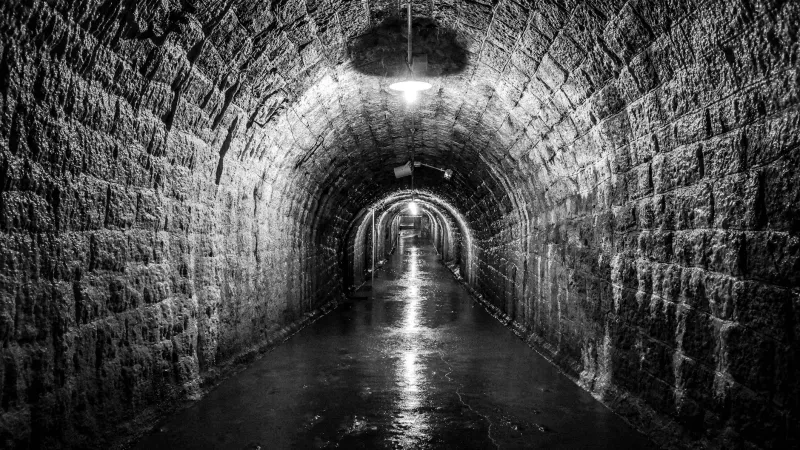
The House That Kept Its Secrets
In a quiet Ohio town, Sarah Jenkins was renovating her 1840s farmhouse when her contractor made a discovery that stopped work cold. Behind what appeared to be a solid wall, they found a narrow chamber just large enough for a person to crouch inside. The space was deliberately built, with ventilation holes disguised as decorative elements and a hidden entrance triggered by pressing a specific floorboard.
Sarah's house had been a station on the Underground Railroad — and she'd been living above a piece of American history for fifteen years without knowing it.
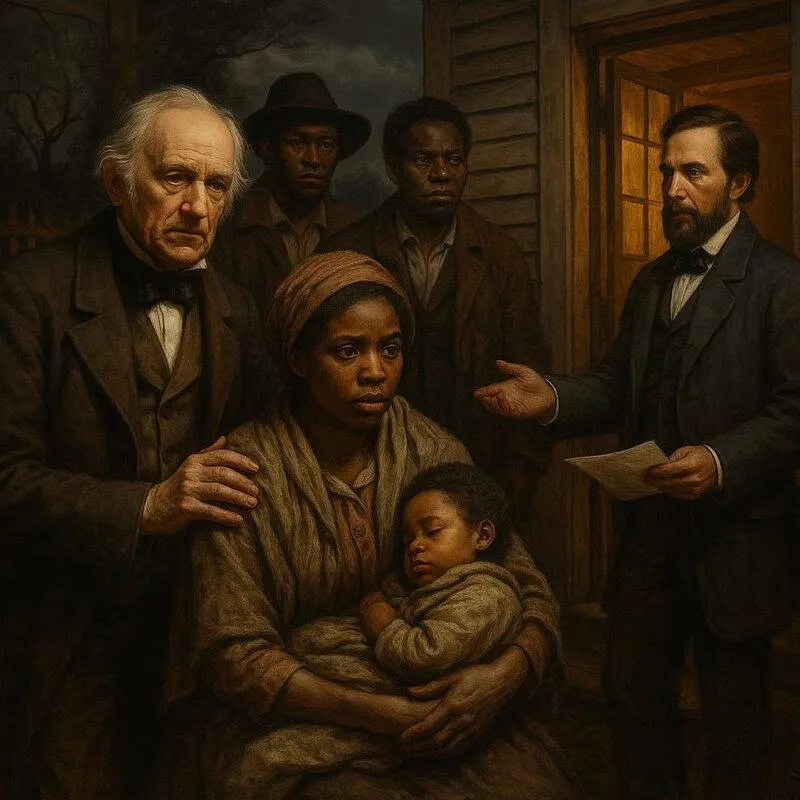 Photo: Underground Railroad, via cdn.historycollection.com
When Buildings Became Conspirators
Across the United States, hundreds of structures still hide the architectural fingerprints of the Underground Railroad. Unlike the dramatic secret passages Hollywood loves, these hiding spots were masterfully ordinary. A root cellar with an extra chamber. A barn with a false floor. A church with a basement that seemed smaller than it should be.
The genius wasn't in elaborate engineering — it was in making extraordinary spaces look completely unremarkable.
Historians estimate that between 1810 and 1860, roughly 3,000 homes, barns, churches, and businesses served as safe houses. Yet fewer than 300 sites have been officially documented and preserved. The rest remain hidden in plain sight, their stories buried under layers of renovations, ownership changes, and the simple passage of time.
Reading the Clues
Architectural historian Marcus Williams has spent two decades learning to decode these buildings. "You have to think like someone who needed to hide people quickly," he explains. "Every modification had to serve dual purposes — it had to look normal to neighbors while functioning as a lifeline for freedom seekers."
Williams has identified several telltale signs that modern homeowners might recognize:
Unexplained structural quirks: Rooms that feel smaller than their exterior dimensions suggest, or cellars with walls that don't quite line up with the foundation.
Odd ventilation: Small holes or grates in unexpected places, often disguised as decorative elements or practical features like foundation vents.
Multiple access points: Spaces accessible from different parts of a building, allowing people to enter from one area and exit through another.
Strategic positioning: Hiding spots near natural escape routes like wooded areas, streams, or roads leading north.
The Signals Only Neighbors Knew
Beyond hidden rooms, entire communities developed subtle communication systems. A specific arrangement of laundry on a clothesline might signal "all clear." A lantern placed in a particular window could mean "danger — keep moving." Some houses used architectural features themselves as signals — a weather vane pointing in an unusual direction, or shutters arranged in a coded pattern.
In southeastern Pennsylvania, local historians recently discovered that several homes used their chimneys as signaling devices. When it was safe to approach, homeowners would light fires in a specific pattern that created distinctive smoke signals visible for miles.
Why These Stories Stay Hidden
The secrecy that once protected freedom seekers now works against historical preservation. Many families never spoke about their ancestors' involvement, even after the Civil War ended. The knowledge died with the participants, leaving behind only architectural mysteries.
Legal concerns also play a role. Unlike famous battlefields or presidential homes, Underground Railroad sites often sit on private property. Owners may be reluctant to publicize their building's history, fearing unwanted attention or tourism pressure.
Some communities have actively suppressed these stories. Towns that preferred to remember themselves as uninvolved in the slavery debate sometimes overlooked evidence of Underground Railroad activity, even when it was hiding in their most prominent buildings.
Modern Treasure Hunters
Today, a growing network of historians, preservationists, and curious homeowners are working to identify and document these hidden spaces. The National Park Service has developed guidelines for recognizing Underground Railroad architecture, and several states now offer grants for preservation efforts.
Local historical societies have become unexpected detective agencies. In Michigan, volunteers use ground-penetrating radar to map suspicious spaces in old buildings. In Indiana, a retired contractor has identified more than forty potential sites by analyzing construction patterns that don't match standard building practices of the era.
The Stories Buildings Tell
These hidden spaces represent something profound about American ingenuity and moral courage. They prove that the Underground Railroad wasn't just a network of famous conductors and dramatic escapes — it was sustained by ordinary people who quietly transformed their homes into sanctuaries.
Every false wall and hidden chamber represents a moment when someone decided that doing the right thing was worth risking everything. These architectural secrets are monuments to collective resistance, built not with marble and bronze, but with everyday lumber and careful planning.
Preserving What Remains
As renovation projects and urban development continue across America, we're in a race against time to identify these sites before they're lost forever. Each hidden room that disappears takes with it a piece of the story about how freedom was actually won — not just on battlefields, but in the careful carpentry and quiet courage of people whose names we'll never know.
The next time you're in an old building that feels a little off — a room that seems smaller than it should, or a wall that sounds hollow when you knock — remember that you might be standing next to a piece of American history that's been keeping its secrets for more than 150 years.