The Spare Room Economy: When American Families Became the Nation's First Hotel Chain
The Original Sharing Economy
In 1923, Clara Henderson of Bakersfield, California, painted a simple sign and hung it in her front yard: "Tourist Room - Clean Bed - 50 Cents." Within a week, she was hosting travelers nearly every night, serving coffee on her front porch and giving directions to dusty motorists heading west toward the coast.
Henderson had just joined America's first sharing economy—a vast, informal network of private homes that housed the nation's earliest road trippers.
When Strangers Were Guests
Before Holiday Inn and Howard Johnson's, before the interstate highway system created demand for standardized roadside lodging, American automobile tourists depended on an entirely different kind of hospitality. Thousands of families across rural America opened their spare bedrooms to travelers, creating a grassroots accommodation network that operated on handshake agreements and hometown trust.
These "tourist homes" weren't businesses in the modern sense. They were extensions of domestic life, where travelers became temporary family members rather than anonymous customers. Guests often shared meals with their hosts, received personalized travel advice, and sometimes formed friendships that lasted for years.
The Economics of Hospitality
The tourist home phenomenon emerged from practical necessity. Early automobile travel was unpredictable—cars broke down, roads washed out, and planned itineraries became impossible to maintain. Travelers needed flexible accommodation options in small towns that couldn't support commercial hotels.
For host families, tourist rooms provided welcome extra income during the Depression and war years. A dollar or two per night could make a significant difference to a farming family's budget. Many hosts used the income to make improvements to their homes, creating a positive feedback loop that improved the quality of accommodation over time.
The pricing was refreshingly transparent. Hand-lettered signs advertised rates that rarely exceeded a dollar per night, often including breakfast. Some hosts offered additional services—packed lunches, car repairs, or local tour guides—but the basic transaction remained simple: a clean bed and honest hospitality.
The Geography of Trust
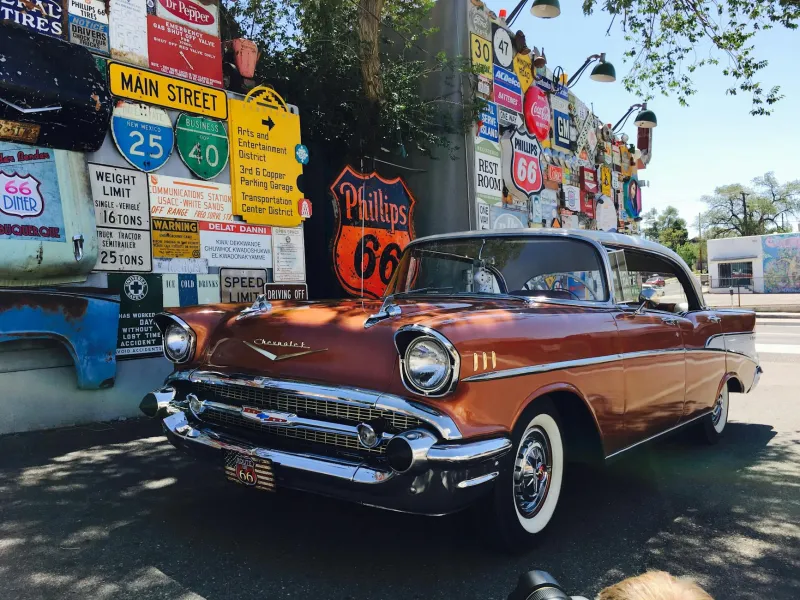
Tourist homes clustered along major automobile routes, particularly in the Midwest and West where distances between towns could stretch for hours. Highway 66, the Lincoln Highway, and other major cross-country routes became dotted with modest homes offering accommodation to passing motorists.
 Photo: Lincoln Highway, via www.cosmos-bowling-arena.de
The network operated on reputation and word-of-mouth recommendations. Travelers would ask for suggestions at gas stations, general stores, and diners. Good hosts developed loyal followings—regular customers who planned their routes around favorite tourist homes.
Some enterprising families created informal partnerships with neighboring hosts, ensuring that travelers could find accommodation even when individual homes were full. This cooperative approach reflected the community-minded spirit that made the system work.
The Domestic Architecture of Welcome
Successful tourist homes developed distinctive features that modern bed-and-breakfast operators would recognize. Separate entrances allowed guests privacy while maintaining family security. Dedicated guest bathrooms became selling points. Front porches served as informal reception areas where hosts could greet travelers and assess their suitability.
Many families invested tourist home income back into guest amenities. They added comfortable furniture, improved lighting, and installed modern conveniences like private sinks in guest rooms. The most successful hosts understood that small touches—fresh flowers, homemade soap, or locally-made quilts—created memorable experiences that generated repeat customers.
The Social Life of the Road
Tourist homes fostered a kind of social interaction that modern travel has largely lost. Hosts and guests genuinely talked to each other—sharing stories about local history, discussing road conditions, and exchanging travel tips. Many hosts became informal ambassadors for their communities, helping visitors discover local attractions and hidden gems.
Guests often found themselves dining with their hosts, participating in family conversations, and learning about regional customs. This domestic intimacy created travel experiences that were both more personal and more authentically local than anything commercial hotels could offer.
Some tourist homes developed their own traditions. Regular guests would time their trips to coincide with local festivals or seasonal activities. Hosts would save newspaper clippings about interesting local events to share with traveling guests.
The Rise of Roadside Standardization
Several factors gradually undermined the tourist home network. The post-war economic boom made commercial travel more affordable for middle-class families, who increasingly preferred the predictability of chain motels. The interstate highway system routed traffic around small towns where most tourist homes were located.
Perhaps most importantly, cultural attitudes toward strangers began to shift. The informal trust that made tourist homes possible—the willingness of families to welcome unknown travelers into their homes—gradually gave way to more cautious, impersonal approaches to hospitality.
Commercial motel chains actively marketed against tourist homes, emphasizing standardization, privacy, and professional service. Their advertising suggested that staying in someone's home was somehow inferior to purpose-built accommodation.
Lessons from the Lost Network
The tourist home tradition offers fascinating parallels to modern sharing economy platforms. Both systems connect travelers with local hosts, rely on reputation-based trust, and offer more personal experiences than traditional commercial alternatives.
But the differences are equally instructive. Tourist homes operated on genuine hospitality rather than algorithmic matching. Hosts were motivated by community spirit as much as profit. And the scale remained human—most families hosted only a few guests at a time, maintaining the intimate character that made the experience special.
The Return of Domestic Hospitality
Today's Airbnb hosts are, in many ways, rediscovering principles that tourist home operators understood instinctively. The value of local knowledge, the appeal of authentic domestic spaces, and the human desire for personal connection during travel.
But something has been lost in translation. Modern platforms emphasize efficiency and scale in ways that would have puzzled Clara Henderson and her contemporaries. They understood that true hospitality couldn't be standardized or automated—it required the messy, inefficient, wonderfully human process of actually caring about strangers.
The tourist home network reminds us that some of America's best innovations happened not in corporate boardrooms but around kitchen tables, where ordinary families figured out how to make travelers feel welcome in an uncertain world.