The Back-Porch Grocery Store You Never Knew Your Neighbors Were Running
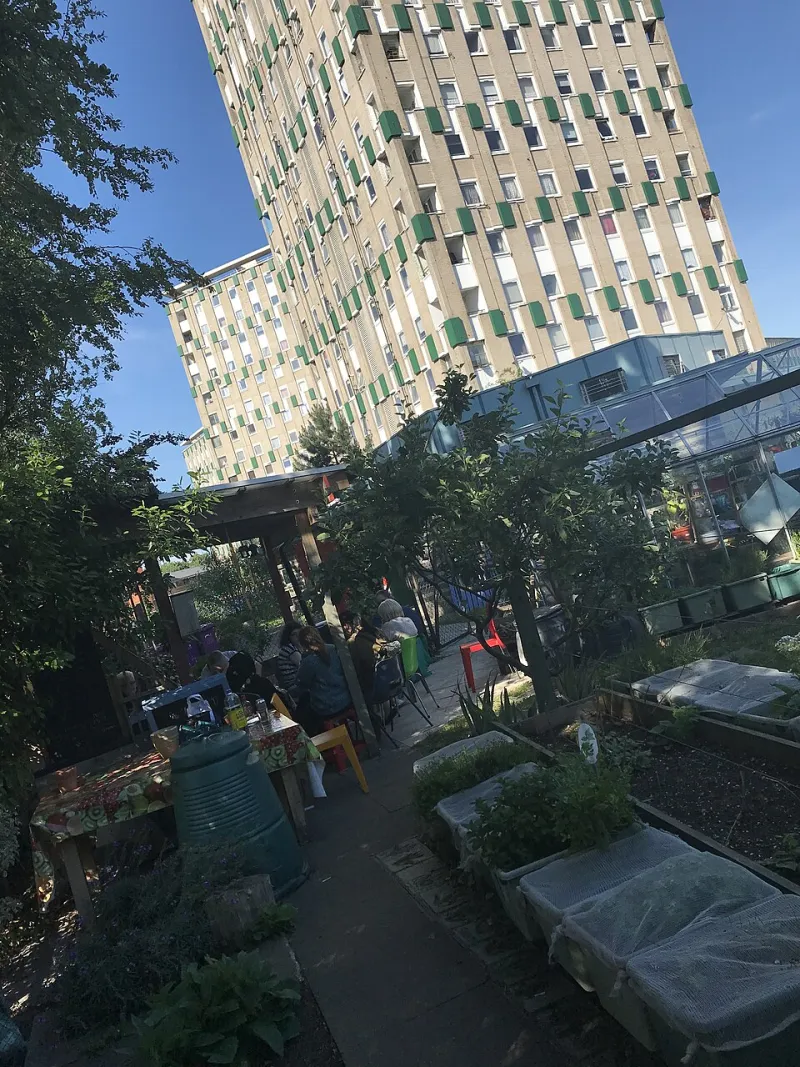
Photo: Taytay95, CC BY-SA 4.0, via Wikimedia Commons
Miss Ida kept a freezer in her garage. Two of them, actually — big chest models she'd acquired secondhand and kept running with the kind of determined resourcefulness that doesn't make it into history books. Twice a week, neighbors would stop by. They'd leave with pork chops, greens, dried beans, and occasionally a jar of something she'd canned herself. Money changed hands sometimes. Sometimes it didn't. Sometimes you came back next week with something from your own garden and called it even.
Miss Ida lived in a neighborhood in Birmingham, Alabama, in the 1970s. The nearest grocery store that carried anything worth buying was a long bus ride away. So she built her own supply chain out of what was available, and the neighborhood ate.
 Photo: Birmingham, Alabama, via c8.alamy.com
This is not a story about one woman. It's a story about a system that existed everywhere and got credit almost nowhere.
The Gap Nobody Was Supposed to Notice
The formal concept of a "food desert" — a geographic area where residents lack reasonable access to affordable, nutritious food — didn't enter mainstream policy conversation until the 1990s. But the condition it describes is considerably older. Communities that mainstream grocery chains deemed insufficiently profitable were being systematically underserved for decades before anyone attached a policy-friendly label to the problem.
What those communities did in response was improvise. And the improvisation was, in many cases, remarkably organized.
Church basements became informal distribution hubs where bulk purchases were broken down and resold at cost. Back porches hosted standing arrangements between neighbors — one family's excess eggs traded against another's surplus preserves. Women who had the means, the storage space, or simply the reputation for reliability became de facto neighborhood provisioners, buying in volume and selling or sharing at a markup just large enough to sustain the operation.
The networks weren't secret, exactly. They were just invisible to anyone who wasn't part of them.
How the System Actually Worked
In rural Black communities across the South, the post-Reconstruction era produced some of the most sophisticated informal food economies the country has ever seen — and almost certainly the least documented. Sharecropping arrangements that restricted cash income pushed families toward barter economies that were, by necessity, highly organized.
A family with a smokehouse might supply cured meat to a dozen neighbors throughout the winter, receiving in return labor, produce, or promises of future reciprocation. The accounting was rarely written down, but it was rarely forgotten either. Social credit — the kind that accrues when you're known as someone who shows up and follows through — was the currency that kept these systems functioning.
Urban versions of the same logic played out in immigrant neighborhoods in cities like Chicago, New York, and Detroit. Italian, Polish, and Jewish communities in the early twentieth century maintained elaborate informal food networks built around trusted intermediaries — often women — who sourced ingredients unavailable in American stores, pooled purchasing power to bring down prices, and maintained a kind of community pantry for families going through hard stretches.
 Photo: New York, via www.metrc.com
In Puerto Rican neighborhoods in New York during the 1950s and 60s, botanicas frequently doubled as informal food sources, stocking dried goods, spices, and specialty items that no supermarket within walking distance bothered to carry. The line between cultural preservation and practical food access was never very clear — which was precisely the point.
The Genius of the Redundant System
What made these networks resilient wasn't any single organizing principle. It was their redundancy. If one node failed — if Miss Ida's freezer broke, if the church basement flooded, if the family with the smokehouse had a bad year — the network rerouted. Relationships that looked informal from the outside were actually load-bearing. People knew who to call. They knew who owed whom a favor. They knew who could be trusted to come through.
This is, incidentally, exactly what modern supply chain theorists mean when they talk about distributed resilience. The communities building these food networks in the 1930s and 1950s weren't reading logistics literature. They were just solving a problem with the tools available, and the solution they landed on was surprisingly robust.
What Got Lost — and What's Coming Back
The expansion of supermarket chains into previously underserved areas in the 1970s and 80s disrupted many of these networks, not always for the better. A supermarket is convenient. It's also a single point of failure. And it carries what the corporation decides is worth carrying, not what the community actually wants to eat.
The food co-op movement that gained momentum in the 1970s was, in many ways, an attempt to formalize the logic of the informal networks — to give them legal structure, shared ownership, and enough institutional stability to survive turnover in their membership. Some of those co-ops are still operating today, and they're thriving.
More recently, a new generation of urban farmers, community-supported agriculture programs, and neighborhood food hubs has essentially rediscovered the same operating principles that Miss Ida and her counterparts were running on instinct. Buy in bulk. Know your neighbors. Keep track of who needs what. Build relationships that outlast any individual transaction.
The vocabulary is different. The Instagram presence is considerably more developed. But the underlying logic — that communities can feed themselves more effectively when they treat food as a shared resource rather than a consumer product — is exactly the same.
The History That Fed People First
None of this made the newspapers at the time. Miss Ida never gave an interview about her freezer operation. The women who ran church basement distribution networks didn't file incorporation papers. The ledger, when there was one, was usually kept in someone's head.
That invisibility is part of the story. These systems worked precisely because they operated in the spaces the market and the government weren't paying attention to. They didn't need recognition to function. They needed trust, consistency, and a community willing to treat feeding each other as a basic obligation.
That turns out to be a pretty good foundation. It always was.