America's Secret Basement Revolution: When Families Carved Out Underground Kingdoms
The Hidden America Beneath Our Feet
In 1952, Harold Zimmerman of Cedar Rapids, Iowa, did something that would seem impossible to modern suburban homeowners: he spent his weekends digging a three-room underground addition to his house. Using nothing but hand tools and sheer determination, Zimmerman carved out a basement workshop, reading room, and guest bedroom that stayed a comfortable 65 degrees year-round without any heating or cooling.
 Photo: Harold Zimmerman, via gotohomerepair.com
 Photo: Cedar Rapids, Iowa, via img-s-msn-com.akamaized.net
Zimmerman wasn't alone. Across mid-century America, thousands of families were quietly excavating elaborate underground spaces—and most of their neighbors had no idea.
The Practical Underground
Unlike today's doomsday bunkers, these underground rooms weren't built from fear. They emerged from a uniquely American combination of self-reliance, frugality, and the simple recognition that the earth beneath your property was free real estate.
In the Midwest, families dug storm cellars that doubled as summer retreats. The thick earth walls provided natural insulation, keeping these spaces cool during brutal prairie summers and warm during harsh winters. Many featured comfortable seating, bookshelves, and even small kitchenettes.
Southern families took a different approach, creating underground root cellars that evolved into surprisingly sophisticated living spaces. What started as food storage often became the family's favorite gathering place—cooler than the house above during sweltering summer evenings.
The DIY Underground Movement
This wasn't a coordinated movement with manifestos or guidebooks. It spread through informal networks: neighbors helping neighbors, fathers teaching sons, word-of-mouth tips shared over backyard fences. The techniques were surprisingly sophisticated, passed down from farming families who had been digging root cellars for generations.
The typical project started modestly. A family would excavate a small storm shelter or root cellar, then gradually expand it as time and energy allowed. Hand-dug tunnels connected rooms. Natural ventilation systems drew fresh air from ingeniously concealed surface openings. Some underground complexes eventually included multiple rooms, workshops, and storage areas that rivaled the square footage of the house above.
Engineering Marvels in Ordinary Backyards
These amateur excavators developed remarkably effective building techniques. They learned to read soil conditions, understanding which types of earth would hold their shape and which required timber reinforcement. They mastered drainage systems that kept underground rooms dry even during heavy rains.
Many incorporated salvaged materials with impressive creativity. Old railroad ties became support beams. Discarded brick lined walls and floors. Surplus military equipment from World War II—including waterproof containers and ventilation fans—found new life in suburban underground projects.
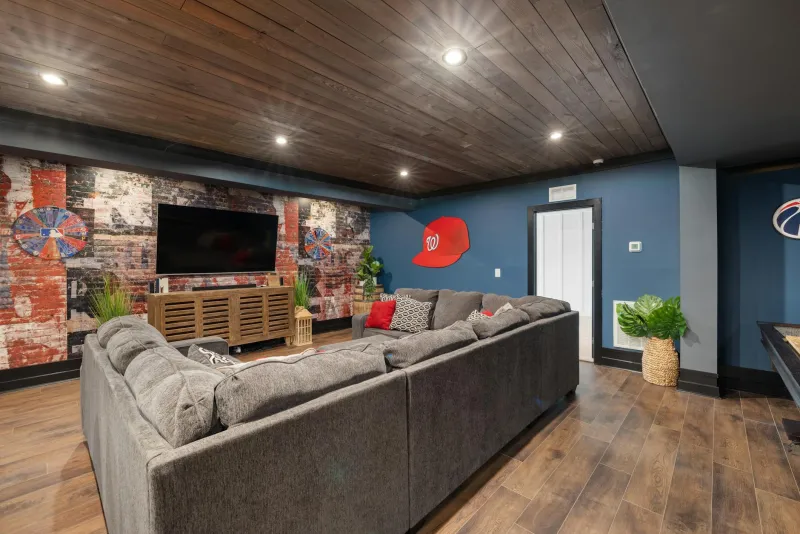
The most ambitious builders created underground spaces that were genuinely beautiful. Stone walls, wooden paneling, built-in furniture, and careful lighting transformed utilitarian cellars into inviting living spaces that guests often preferred to the formal rooms upstairs.
The Social Life of Secret Spaces
These underground rooms served functions that modern homes have largely forgotten. They were cool retreats during summer heat waves, quiet study spaces away from household noise, and informal gathering places where families could relax without worrying about maintaining appearances.
Many became the domain of teenage children, who appreciated having space that felt truly private. Others served as workshops where fathers taught practical skills to their sons—woodworking, electrical repair, and the satisfaction of building something useful with your hands.
Some underground rooms developed their own social traditions. Families would retreat to their "lower level" for evening card games, informal dinners, or simply to escape the heat. Neighbors who discovered these hidden spaces often became regular visitors, drawn by the novelty and comfort of underground living.
Why the Tradition Faded
Several factors killed America's underground building tradition. The rise of air conditioning made natural cooling less appealing. Suburban building codes became more restrictive, making unpermitted excavation risky. Perhaps most importantly, the cultural shift toward professional contractors and store-bought solutions discouraged the kind of ambitious DIY projects that previous generations had taken for granted.
The 1960s suburban ideal emphasized uniform, visible prosperity. Underground additions were invisible to neighbors—and in a culture increasingly focused on displaying success, hidden improvements seemed pointless. Why dig a basement reading room when you could build a deck that everyone could see?
Rediscovering Underground Potential
Today's homeowners, facing rising energy costs and shrinking lot sizes, might learn something from these forgotten underground pioneers. Modern excavation equipment makes digging easier than ever, and contemporary waterproofing materials would have amazed mid-century builders.
The environmental benefits are compelling. Underground spaces require minimal heating and cooling. They don't consume valuable yard space. And they offer natural protection from severe weather—increasingly important as climate change brings more extreme storms.
The Lost Art of Thinking Down
Perhaps most importantly, America's underground building tradition represents a different way of thinking about property and possibility. These builders saw their lots not as fixed surfaces but as three-dimensional opportunities. They understood that useful space could be carved out rather than simply purchased.
In our age of tiny houses and expensive real estate, maybe it's time to remember that some of the most comfortable, energy-efficient living spaces in American history were hiding right beneath our feet—built by ordinary families who refused to accept that the ground beneath their property was off-limits.
These underground rooms stand as monuments to an America that built its own solutions, one shovelful at a time.